.png)
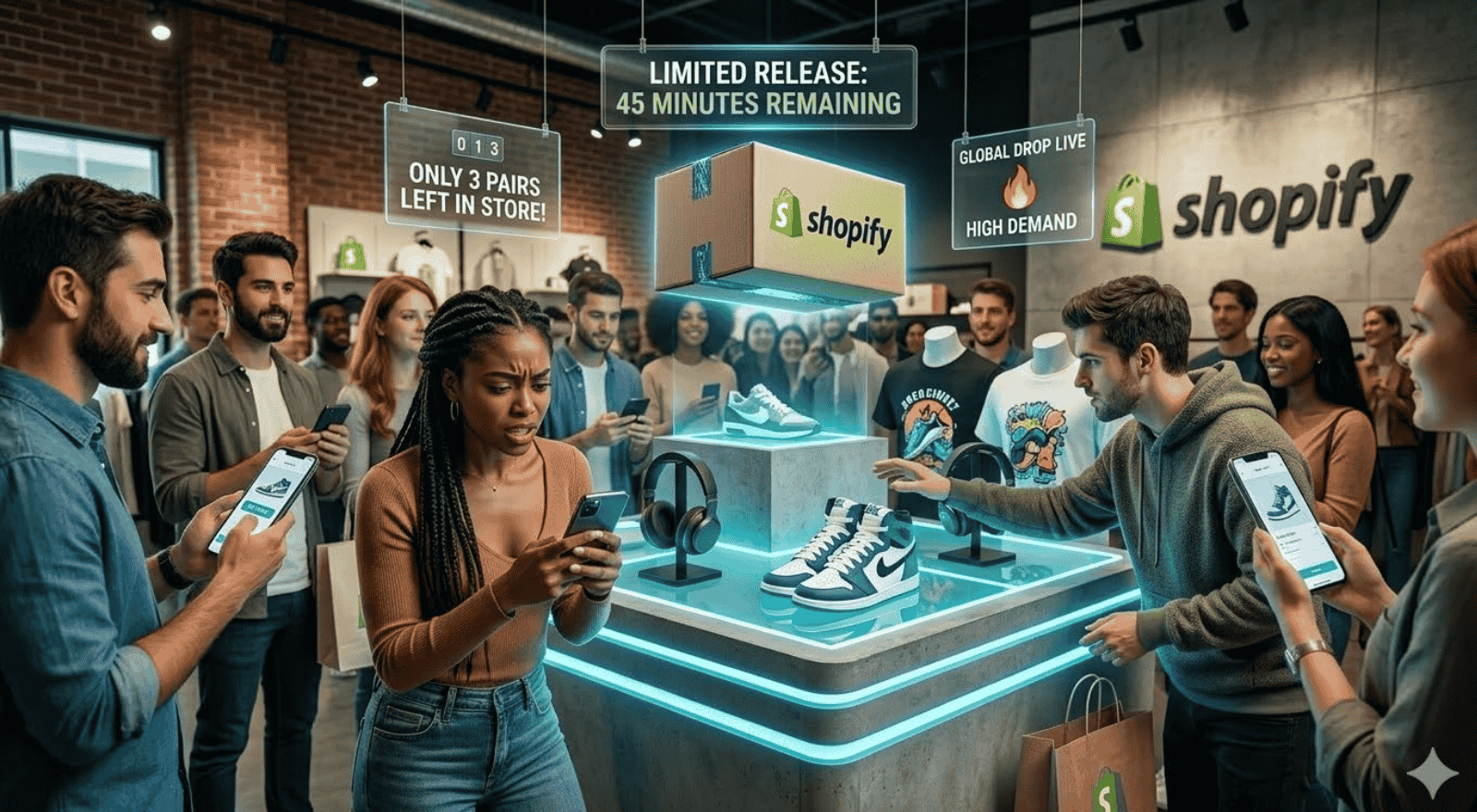
Building hype before a product drop is one of the most important factors that determines whether a launch sells out or fails quietly. Many Shopify merchants assume that simply releasing a limited product will automatically generate demand. In reality, successful product drops are rarely spontaneous events. They are carefully orchestrated campaigns that build anticipation weeks before the product becomes available. Brands that treat launches like events, rather than ordinary product listings, consistently see stronger engagement and faster sell-through.
Hype works because it concentrates attention. When customers know that a product will launch at a specific moment and that inventory will be limited, they begin preparing to participate in the release. Instead of discovering the product randomly while browsing a store, they arrive with the intention of purchasing as soon as the drop opens. This change in customer behavior is what transforms a simple product release into a high-demand launch moment. Brands such as Supreme and Nike have spent years perfecting this approach. Their audiences expect limited releases and prepare for them in advance, often waiting for launch times with notifications and reminders already set. Shopify merchants can apply the same principles by structuring their launches around anticipation, communication, and controlled access. When hype is built properly, the drop begins with an audience that is already ready to buy.
Why Hype Is Essential for Product Drops
A product drop without hype is simply a product release with limited inventory. Scarcity alone does not guarantee demand. What makes drops successful is the anticipation that builds before the launch begins. Customers need time to discover the product, understand its value, and prepare to participate in the release.
When hype marketing works correctly, attention builds gradually as the launch approaches. Customers see previews, hear about the release date, and begin planning to visit the store at the exact moment the product becomes available. Instead of relying on random discovery through search or advertising, the brand creates a concentrated moment where large numbers of customers arrive simultaneously.
“Scarcity works best when customers know about the opportunity before it appears.”
This is why most successful drops are announced well in advance. The marketing effort that happens before launch often matters more than the launch itself. Without anticipation, the drop feels like a normal product listing. With anticipation, the release becomes a moment customers actively wait for.
The Psychology Behind Product Drop Hype
Hype marketing works because it taps into several powerful psychological triggers that influence how customers make purchasing decisions. One of the most important triggers is scarcity. When customers believe a product may sell out quickly, they are more likely to purchase immediately rather than waiting. Another important factor is anticipation. When people look forward to an upcoming event, they often become emotionally invested before it even happens. This anticipation increases engagement and makes the eventual purchase feel more rewarding. Brands that build anticipation correctly often see stronger demand because customers feel connected to the launch experience.
“Anticipation turns a product release into an event.”
Fear of missing out also plays a major role in product drop hype. When customers see others discussing a launch or preparing for a drop, they begin to feel pressure to participate. This social influence amplifies the effect of scarcity, encouraging more customers to show up when the release begins.
Together, these psychological forces create the momentum that drives successful product drops.
Step 1: Start Teasing the Product Early
The first step in building hype is introducing the product before it becomes available. Instead of revealing everything at once, brands gradually release small pieces of information that spark curiosity. These teaser campaigns allow customers to become aware of the upcoming launch while leaving enough mystery to keep them interested.
Teasers can take many forms depending on the brand and product category. Some companies release partial product images, while others share short videos or behind-the-scenes content that hints at the upcoming release. The goal is to capture attention without fully revealing the product too early.
Successful teaser campaigns often include:
- Preview images: Early images of the product give customers a visual introduction while leaving some details undisclosed.
- Short video clips: Brief videos showing design details or packaging can generate curiosity and encourage sharing on social media.
- Behind-the-scenes content: Showing the development process or design inspiration can strengthen the story behind the product.
Each teaser adds another layer of anticipation, encouraging customers to follow updates and look forward to the launch.
Step 2: Build a Pre-Launch Audience
Hype marketing works best when the brand has a clear audience ready for the release. Instead of waiting for customers to discover the drop organically, merchants should gather potential buyers before the launch begins.
Email waitlists are one of the most effective ways to build this audience. When customers sign up to receive launch notifications, they demonstrate clear purchase intent. These subscribers become the first group to notify when the drop begins, which increases the likelihood of immediate sales.
Several methods can help merchants build a pre-launch audience:
- Email capture pages: Simple signup pages allow customers to register for launch notifications.
- Community announcements: Posting about upcoming releases in brand communities encourages existing followers to participate.
- Early access registration: Some brands allow waitlist members to receive early access before the public launch.
By the time the drop arrives, the brand already has a group of interested customers waiting for the product.
Step 3: Create a Dedicated Hype Page
Sending customers directly to a product page before a drop can reduce anticipation. Instead, many brands create dedicated hype pages that introduce the product and explain the launch details. These pages act as the central location where customers learn about the upcoming release.
A hype page typically includes product previews, launch information, and messaging that builds excitement around the drop. Visitors can explore the product, understand the story behind it, and prepare for the release. This structure keeps the product hidden while still allowing the brand to communicate the value of the upcoming launch.
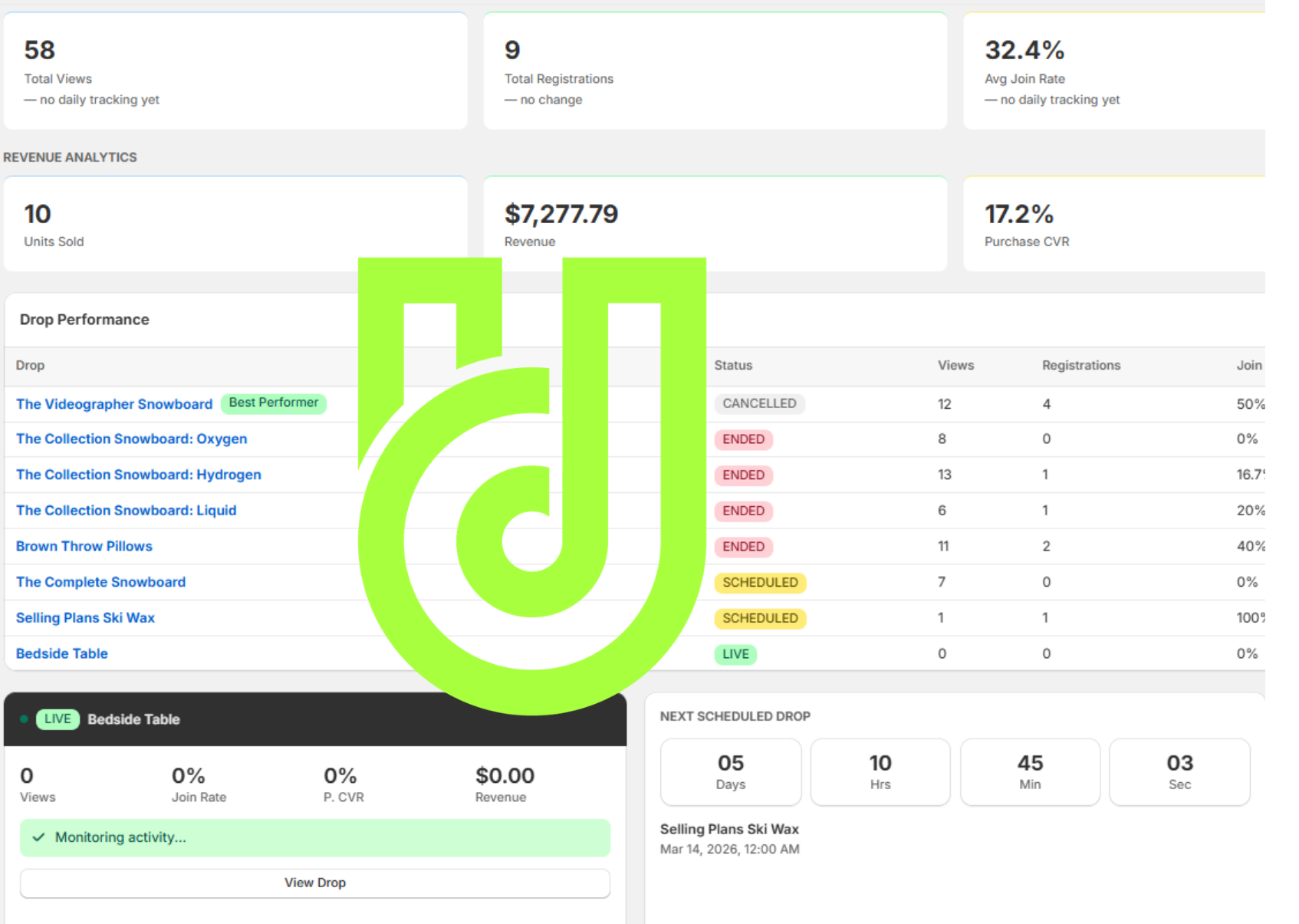
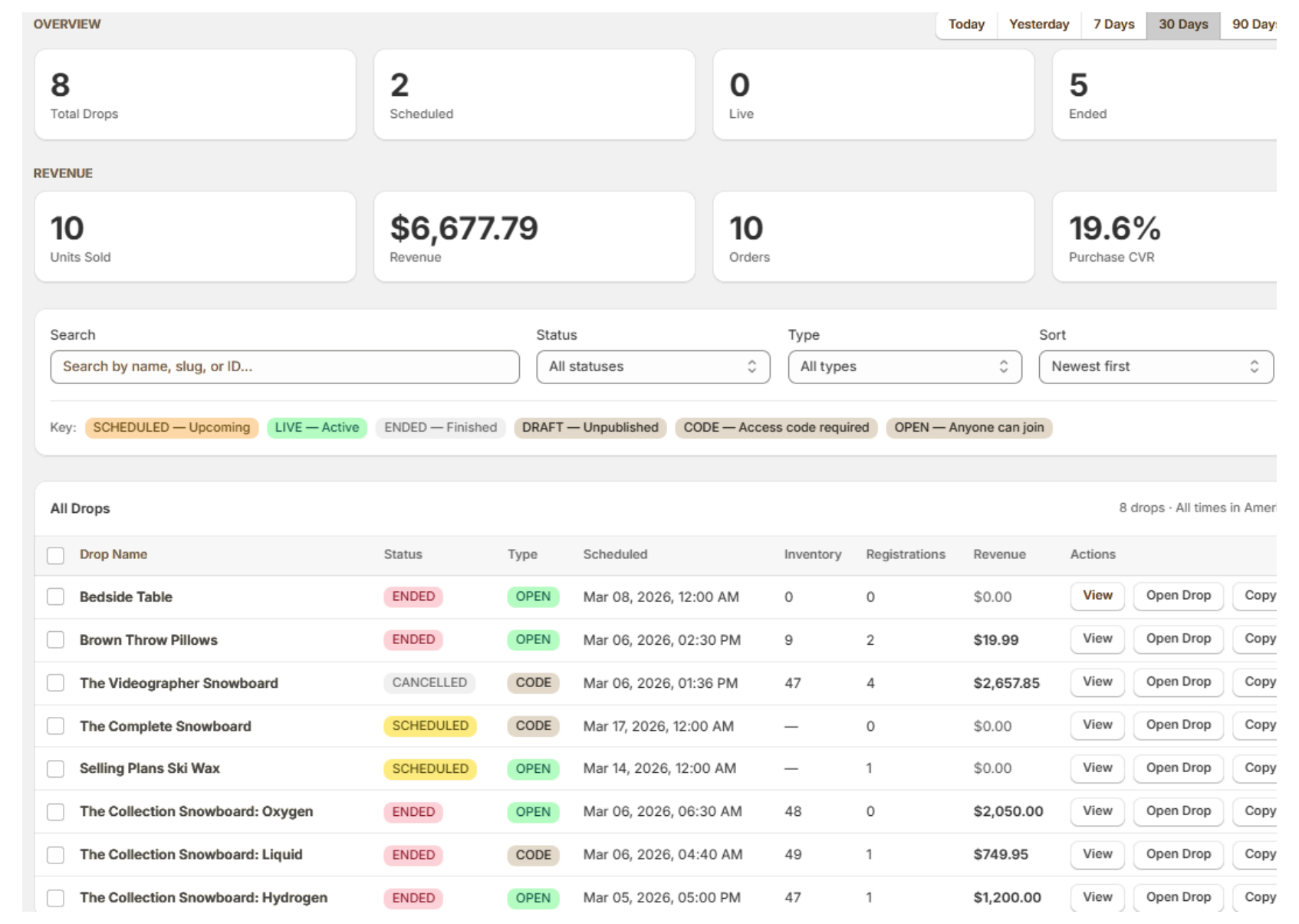
Some Shopify merchants implement this strategy using dedicated launch pages that combine previews, countdown timers, and gated access to the product page. Tools like UnlistedDrop allow merchants to create these types of hype pages while keeping the product itself hidden until the drop begins. When designed correctly, the hype page becomes the central hub for the entire launch campaign.
Step 4: Use Countdown Timers to Build Anticipation
Countdown timers are one of the simplest and most effective tools for building hype before a product drop. A visible timer shows customers exactly how long remains before the product becomes available. This makes the launch moment feel real and encourages visitors to return at the correct time. Countdown timers also reinforce the sense of urgency surrounding the release. When customers see the remaining time ticking down, they become more aware that the opportunity to purchase is approaching quickly.
“A countdown timer transforms an abstract launch date into a visible deadline.”
Many brands place countdown timers directly on their hype pages so visitors immediately understand when the drop will occur. Some merchants also share countdown reminders through social media or email campaigns to ensure their audience does not miss the launch moment.
Step 5: Amplify the Launch Across Channels
Once hype begins building, the next step is spreading awareness through multiple marketing channels. The goal is to ensure that customers hear about the drop in several places before the launch date arrives. Social media plays a central role in this stage. Platforms such as Instagram, TikTok, and Twitter allow brands to share teaser content and reminders leading up to the drop. Influencer collaborations can also expand the reach of these announcements by introducing the product to new audiences.
Effective launch promotion often includes:
- Social media announcements: Regular posts that reveal new details about the product.
- Influencer previews: Partnerships with creators who introduce the product to their followers.
- Email reminders: Messages sent to waitlist subscribers as the launch approaches.
Using multiple channels increases the likelihood that customers will notice the upcoming release and participate in the drop.
Step 6: Coordinate the Launch Moment
When the launch time finally arrives, all the anticipation built during the hype campaign should convert into immediate traffic. Customers who have been following the drop will already be waiting for the product to become available.
Coordinating this moment requires careful preparation. Merchants must ensure that the product becomes accessible at the exact launch time and that customers know where to go to purchase it. A well-organized launch page helps direct traffic to the correct location without confusion. Some brands use gated product pages that unlock automatically when the countdown reaches zero. This ensures that every customer experiences the release simultaneously. Merchants running drops through structured launch pages often rely on tools like UnlistedDrop to manage countdown timing and controlled access during the release. When the launch moment is executed correctly, the hype built during the previous weeks turns into immediate sales.
Common Mistakes When Building Product Drop Hype
Even brands with strong products can struggle if their hype strategy is poorly executed. Several common mistakes can reduce the effectiveness of a drop campaign.
- Announcing the drop too late: If customers only hear about the release shortly before it happens, there is not enough time to build anticipation.
- Revealing everything too early: Showing the full product too soon can remove the mystery that drives hype marketing.
- Lack of launch structure: Without a clear countdown or launch page, customers may not understand when the drop begins.
- Weak communication: If launch timing and instructions are unclear, potential buyers may miss the release.
Avoiding these mistakes helps ensure that hype marketing works as intended.
How Successful Brands Build Drop Hype
Many of the most recognizable product drop brands rely on consistent launch structures that train customers to expect upcoming releases. Streetwear brands in particular have turned hype marketing into a repeatable system that keeps audiences engaged throughout the year.
Supreme is a well-known example. The brand releases new products on a predictable weekly schedule, allowing customers to anticipate drops and plan their purchases accordingly. Nike uses a similar approach with its limited sneaker releases, often building anticipation through preview campaigns and countdown announcements.
These brands succeed because they treat product launches as cultural events rather than routine product listings. By building anticipation before each drop, they create communities of customers who actively follow upcoming releases.
Turning Hype Into Sales
Hype marketing only matters if it ultimately leads to purchases. The goal of building anticipation is to ensure that customers arrive ready to buy when the product becomes available. If the launch experience is confusing or poorly structured, the excitement built during the hype phase may not translate into sales. Successful drops combine anticipation with clear launch infrastructure. Customers should know exactly where to go, when the product will become available, and how they can purchase it. This clarity removes friction from the buying process and allows excitement to turn into action. When executed properly, hype marketing transforms a product release into an event that customers actively participate in. Instead of hoping that shoppers discover a new product, the brand creates a moment where customers show up ready to purchase.
If you are planning your first product drop on Shopify, UnlistedDrop helps merchants build hype pages, countdown launches, and gated access experiences that keep products hidden until the exact launch moment. The 7-day free trial allows you to set up your first drop and see how the launch infrastructure works before committing.
Explore more blogs