Scarcity marketing is one of the most powerful psychological strategies used in ecommerce. It works by creating the perception that a product is limited in availability, which encourages customers to make purchasing decisions more quickly. Instead of allowing shoppers to delay their decision indefinitely, scarcity introduces urgency that pushes them toward immediate action.
In online retail, customers are constantly exposed to thousands of products and competing brands. Because there are so many choices available, shoppers often postpone purchases or abandon products they initially considered buying. Scarcity marketing helps solve this problem by communicating that access to a product may disappear if the customer waits too long.
Many successful Shopify brands rely on scarcity marketing as part of their broader growth strategy. Limited inventory releases, timed product launches, exclusive collections, and countdown timers are all examples of tactics that create scarcity in ecommerce environments. When used correctly, these strategies can significantly increase engagement, conversions, and product sell-through rates.
What Scarcity Marketing Means in Ecommerce
Scarcity marketing refers to the practice of intentionally limiting product availability in order to increase perceived value and motivate faster purchasing decisions. The core idea is simple. When people believe something is rare or difficult to obtain, they tend to value it more highly.
In ecommerce stores, scarcity can be communicated in several ways. Some brands release limited quantities of products, while others restrict how long an item will remain available. Both approaches create the same psychological effect. Customers begin to believe that waiting could result in losing access to the product entirely.
The strategy works because shoppers often evaluate risk when deciding whether to purchase something. If a product appears widely available, the perceived risk of waiting is very low. However, when a brand communicates that inventory is limited or time is running out, the risk of missing the opportunity becomes much higher.
This shift in perception is what makes scarcity such an effective marketing tool.
Why Scarcity Influences Customer Behavior
Human decision making is heavily influenced by psychological triggers that affect how people evaluate opportunities. Scarcity activates several of these triggers at the same time, which explains why it has such a strong impact on purchasing behavior.
One of the most important factors is loss aversion. People tend to fear losing an opportunity more than they value gaining something new. When a product is described as limited or exclusive, customers begin to worry that they may lose the chance to obtain it.
Another important factor is social influence. When shoppers see that a product is selling quickly or that others are participating in a launch event, they assume the product must be desirable. This perception can increase the urgency to purchase before the item becomes unavailable.
Together, these psychological responses encourage customers to move more quickly through the purchasing process.
Common Types of Scarcity Marketing
Scarcity marketing can take several different forms depending on the strategy a brand wants to implement. Some approaches limit the quantity of products available, while others limit the time customers have to purchase them.
Common scarcity tactics include:
- Limited inventory releases: Brands intentionally produce a small number of units so that products sell out quickly. This approach is common in fashion, collectibles, and limited edition merchandise.
- Time-limited offers: Products or discounts remain available only for a short period. When customers know that the offer will expire soon, they are more likely to purchase immediately.
- Exclusive member access: Some brands allow only certain groups of customers to access a product release. These groups may include email subscribers, community members, or loyalty program participants.
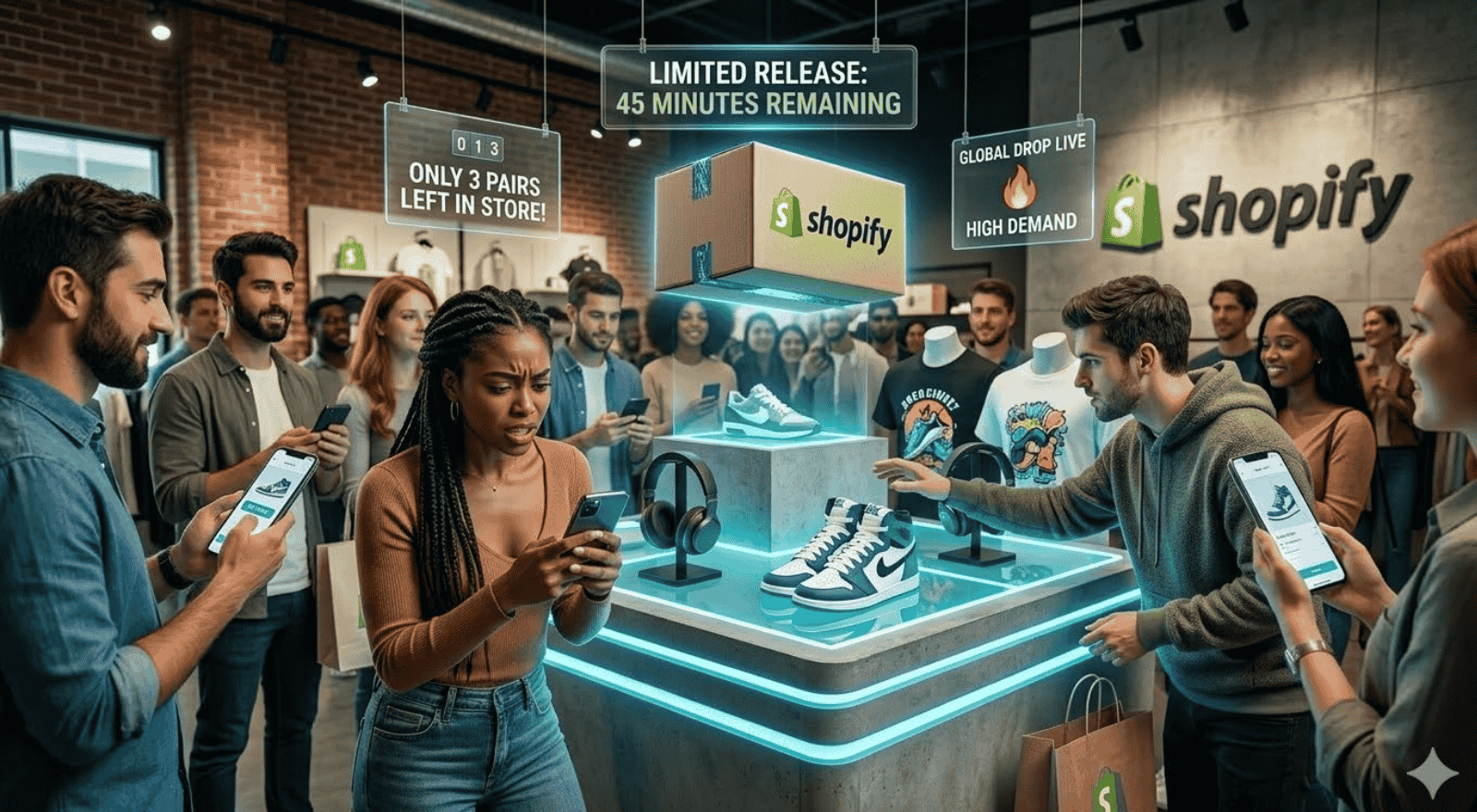
- Scheduled product drops: Products become available at a specific time rather than remaining permanently in the store. This creates anticipation and encourages customers to return at the launch moment.
Each of these tactics creates urgency by limiting access to products.
Scarcity Marketing in Shopify Stores
Shopify merchants often use scarcity marketing to improve conversion rates and increase demand during product launches. Because Shopify stores operate in highly competitive markets, merchants must find ways to stand out and motivate customers to act quickly.
One of the most common scarcity strategies used by Shopify brands is the product drop. Instead of adding products to the store catalog indefinitely, merchants release them at scheduled times with limited inventory. This approach concentrates customer attention around a single launch event and often results in faster sell-through.
Many brands also create dedicated launch pages that include countdown timers, product previews, and early access signups. These pages help build anticipation before the product becomes available and encourage visitors to return when the launch begins.
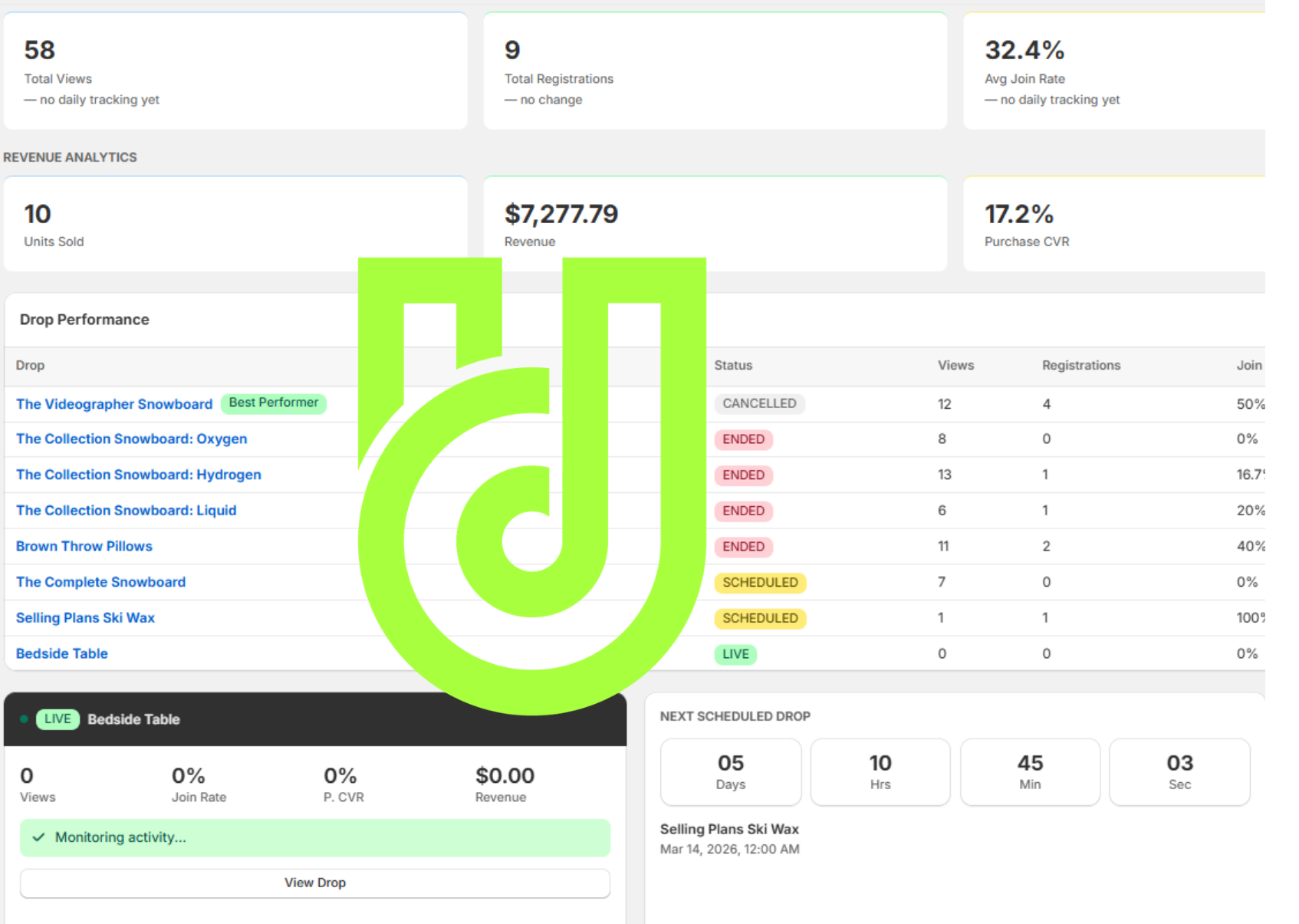
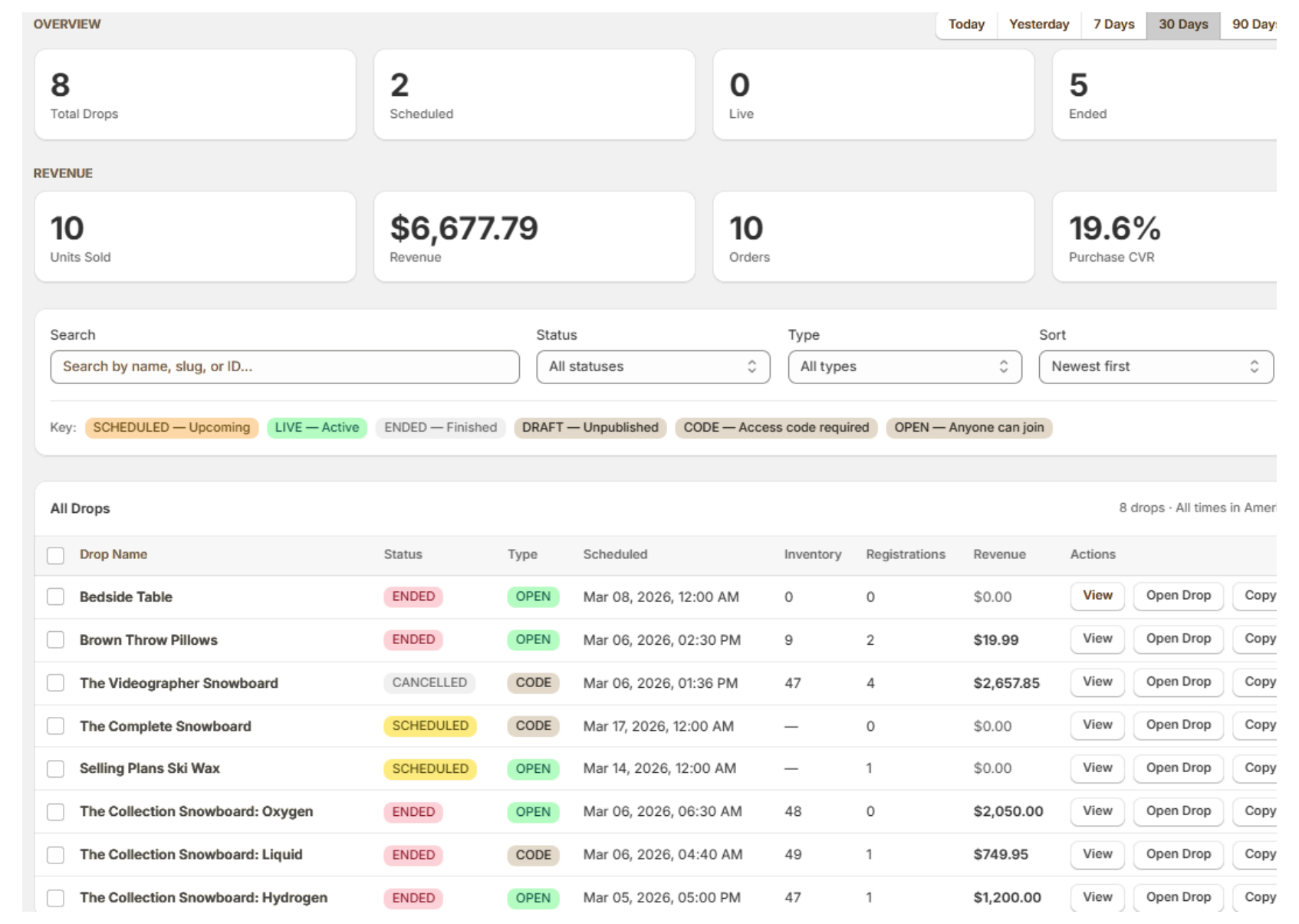
Tools such as UnlistedDrop allow Shopify merchants to build structured launch environments with countdown timers, gated access, and dedicated drop pages. These systems help brands control how customers access limited releases while maintaining the sense of exclusivity that scarcity marketing requires.
Benefits of Scarcity Marketing for Ecommerce Brands
Scarcity marketing provides several advantages for ecommerce brands when implemented thoughtfully. Instead of relying solely on paid advertising to drive sales, brands can use scarcity to create organic demand and stronger engagement with their audiences.
Key benefits include:
- Higher conversion rates: When customers believe a product may sell out soon, they are more likely to complete their purchase immediately.
- Stronger product demand: Limited availability increases perceived value and can make products appear more desirable.
- Faster inventory turnover: Concentrated demand often leads to quicker sell-through compared with products that remain permanently available.
- Increased marketing engagement: Teasers, countdowns, and launch announcements generate excitement before a product release.
- Stronger brand identity: Scarcity strategies can make a brand feel exclusive and distinctive.
These advantages explain why scarcity marketing has become a common strategy among modern direct-to-consumer brands.
Risks of Using Scarcity Marketing Incorrectly
Although scarcity marketing can be highly effective, it must be implemented carefully. When brands misuse scarcity tactics, customers may perceive the strategy as manipulative rather than authentic.
One common mistake is creating artificial scarcity where products appear limited but remain available indefinitely. When customers realize that the scarcity is not genuine, trust in the brand can decline. Authentic scarcity works best when inventory is truly limited or when a release genuinely occurs within a restricted time window. Another risk involves overusing scarcity tactics. If every product launch relies on urgency and limited availability, customers may eventually ignore the messaging. Scarcity is most powerful when it is used selectively for important releases.
Brands should therefore treat scarcity as a strategic tool rather than a constant marketing technique.
When Scarcity Marketing Works Best
Scarcity marketing tends to perform best for products that carry emotional or cultural value. Fashion brands, creator merchandise, collectibles, and limited collaborations often benefit significantly from scarcity-driven launches because customers value exclusivity. Community-driven brands also benefit from scarcity strategies. When customers feel connected to a brand’s story or identity, participating in a limited release can become part of the brand experience. Drops and exclusive releases allow these communities to engage with the brand in meaningful ways.
However, scarcity may not work as effectively for everyday commodity products. Items that customers expect to be consistently available may perform better under traditional ecommerce models where inventory remains accessible at all times. Understanding when scarcity marketing fits a brand’s product category is essential for using the strategy successfully.
Scarcity marketing is likely to remain a central strategy in ecommerce as competition between online brands continues to increase. Modern consumers are increasingly drawn to experiences rather than simple transactions, and limited product releases help transform shopping into a more engaging activity. The growth of creator-led brands and community-driven commerce will likely strengthen the role of scarcity marketing in the coming years. As audiences become more connected to the brands they follow, they often enjoy participating in exclusive product launches and limited releases.
Technology is also making it easier for merchants to implement scarcity strategies. Shopify merchants can now create countdown pages, gated access, and structured launch experiences without complex development work. Platforms such as UnlistedDrop allow brands to manage limited releases and drop campaigns within their existing ecommerce stores.
For many modern brands, scarcity marketing has become an essential component of successful ecommerce strategy.
Explore more blogs