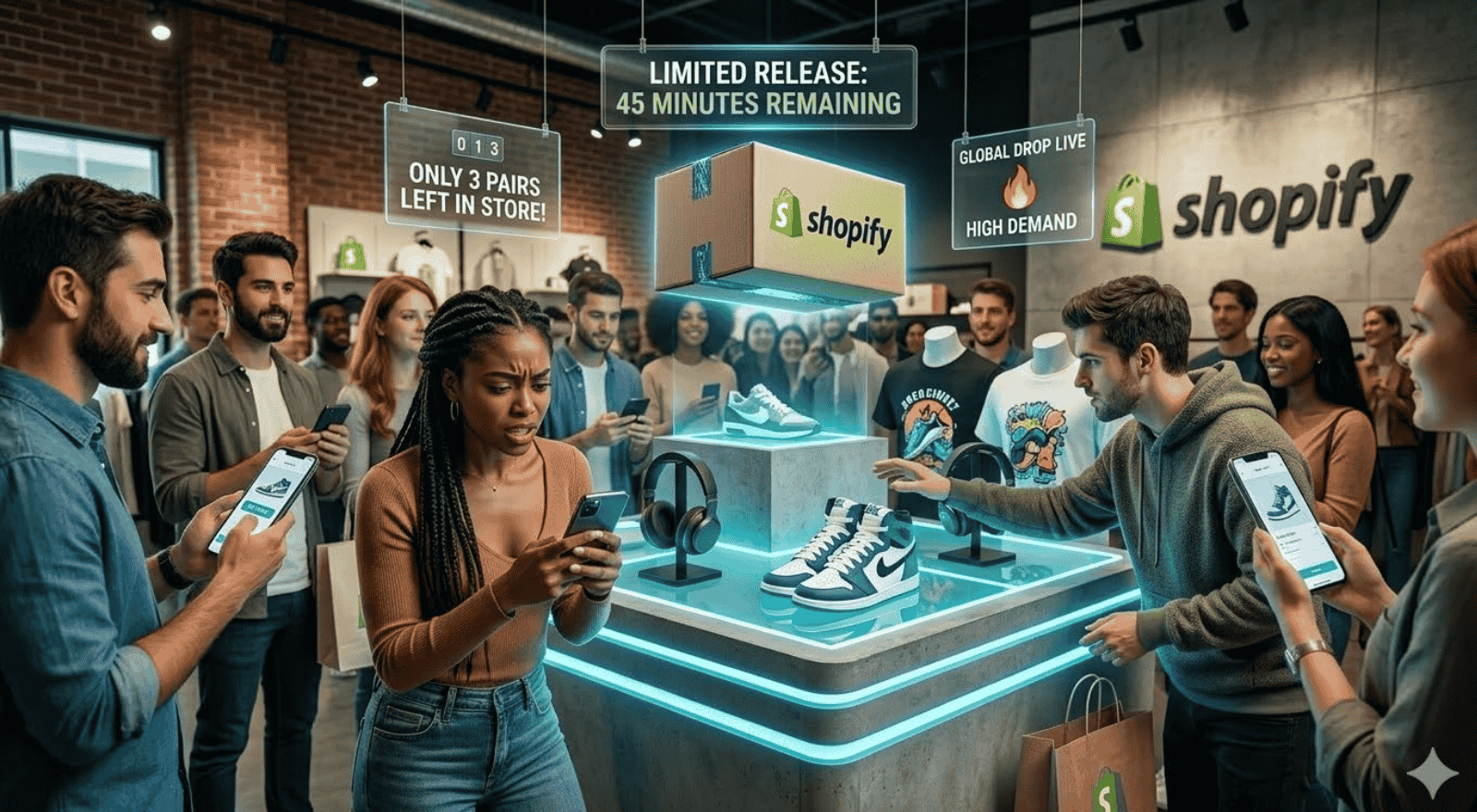
Ecommerce brands have many ways to introduce new products to their customers. Some simply add items to their online store and allow customers to discover them naturally through browsing, advertising, or search. Others treat product launches as structured marketing events designed to generate excitement and immediate demand. One strategy that has become increasingly popular among modern brands is the product drop.
A product drop is a planned product release where a brand launches a limited quantity of items at a specific time rather than making them continuously available. Instead of quietly adding inventory to a store’s catalog, brands create anticipation for a scheduled release that customers prepare for in advance. This approach transforms a standard product release into a focused event that can generate significant traffic and engagement.
The strategy first gained popularity among fashion and streetwear companies, but it has now spread to many other ecommerce categories. Shopify merchants, in particular, often use drops to control inventory, create hype around releases, and increase the likelihood that products sell out quickly. Understanding how product drops work helps merchants decide whether this approach can support their own launch strategies.
Product drops combine marketing, psychology, and operational planning into a single system. When executed effectively, they allow brands to concentrate demand into a short window of time and turn new releases into memorable brand moments.
What Is a Product Drop in Ecommerce
A product drop is a release strategy where a company launches a limited quantity of products at a predetermined time instead of offering them continuously in its store. Customers typically know in advance when the drop will occur and often prepare for the release by visiting the website or joining waitlists before the launch begins. The goal is to concentrate demand into a single moment when the product becomes available.
In traditional ecommerce models, products are added to the store catalog and remain available until inventory sells out. Customers can purchase them whenever they want, and the store operates like a permanent marketplace. Product drops change this dynamic by introducing a controlled release structure where access to inventory is intentionally limited. This model often includes several coordinated elements such as marketing announcements, scheduled release times, and limited quantities of inventory. Because customers know the product may sell out quickly, they are more likely to visit the store at the exact moment the release begins. The drop therefore becomes a shared event between the brand and its audience.
“Scarcity increases perceived value because customers believe access to the product may disappear.”
By controlling both supply and timing, product drops create urgency that does not exist in traditional catalog-based ecommerce. Customers often feel motivated to purchase immediately rather than delaying their decision.
How Product Drops Became Popular in Ecommerce
Product drops became widely recognized through the influence of streetwear brands and fashion companies. These brands frequently released limited collections rather than maintaining large permanent inventories. Instead of producing thousands of units of each product, they released small batches that sold out quickly. This strategy created a culture around product releases. Customers began following brands closely so they could participate in each launch event. Fans of the brand would monitor announcements and visit stores at specific times to secure items before they sold out.
As the popularity of these launches grew, the term “drop” became widely used to describe the release of new products. The concept soon expanded beyond fashion and entered the broader ecommerce landscape. Direct-to-consumer brands in many industries realized that controlled product releases could generate far more attention than traditional catalog launches. Social media accelerated this trend by giving brands a platform to build anticipation before a release. Companies began posting teaser images, behind-the-scenes content, and countdown announcements that hinted at upcoming launches. This marketing style encouraged customers to watch closely for future releases and participate in drops when they occurred.
Today, product drops are used by brands in many industries including fashion, beauty, collectibles, creator merchandise, and limited-edition collaborations. The strategy works particularly well for brands that want to create memorable experiences around product launches.
How Product Drops Work for Shopify Stores
Running a product drop on Shopify involves several coordinated steps that help create anticipation and manage the release. Merchants typically plan these launches in advance and build marketing campaigns that lead customers toward the drop date. Instead of releasing a product immediately after it is created, the brand spends time building awareness and excitement.
The first stage usually involves announcing the upcoming drop to the brand’s audience. This can happen through email newsletters, social media posts, and teaser campaigns that introduce the product before it becomes available. The goal is to let customers know that a specific release is coming soon and that they should be prepared for the launch.
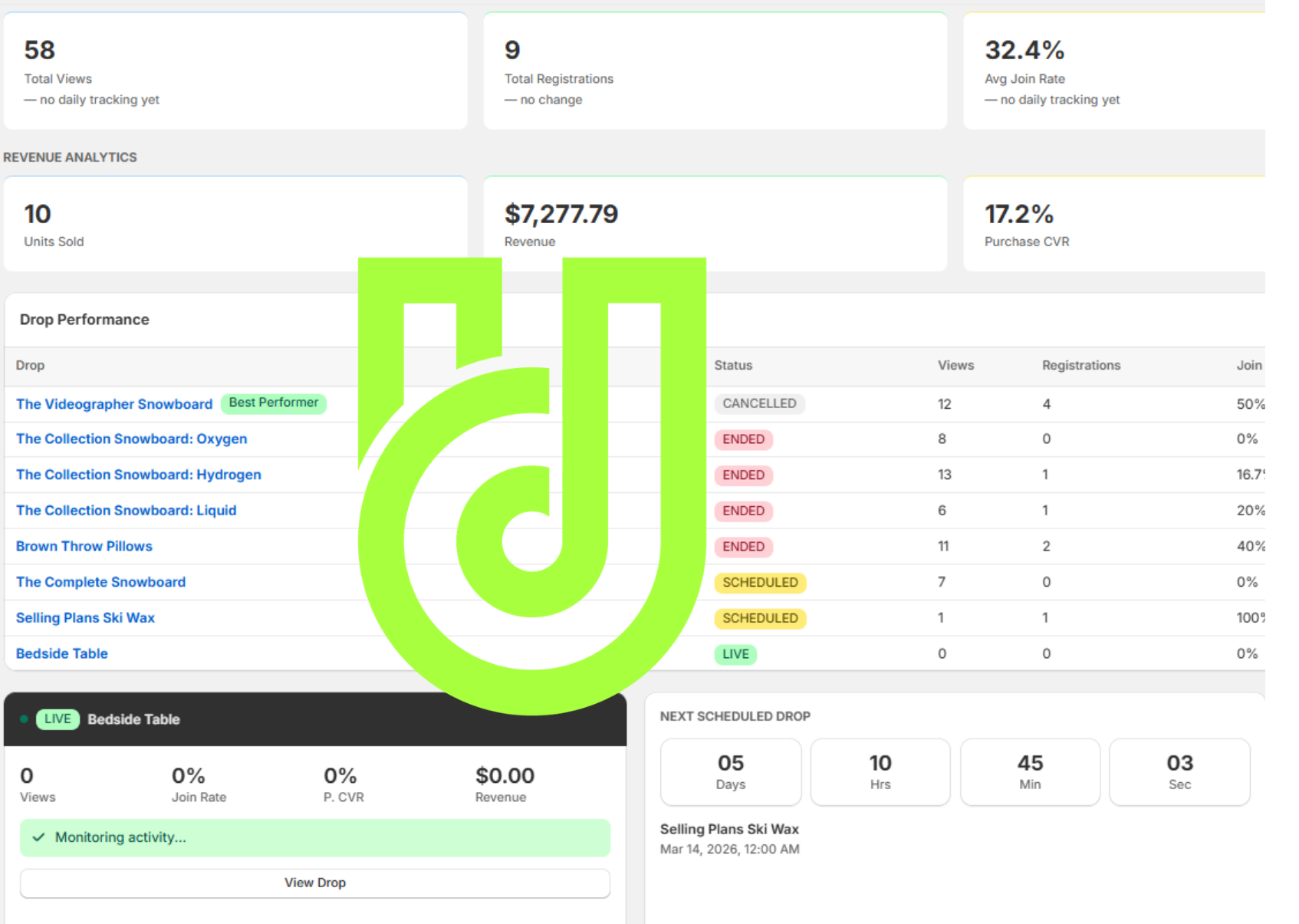
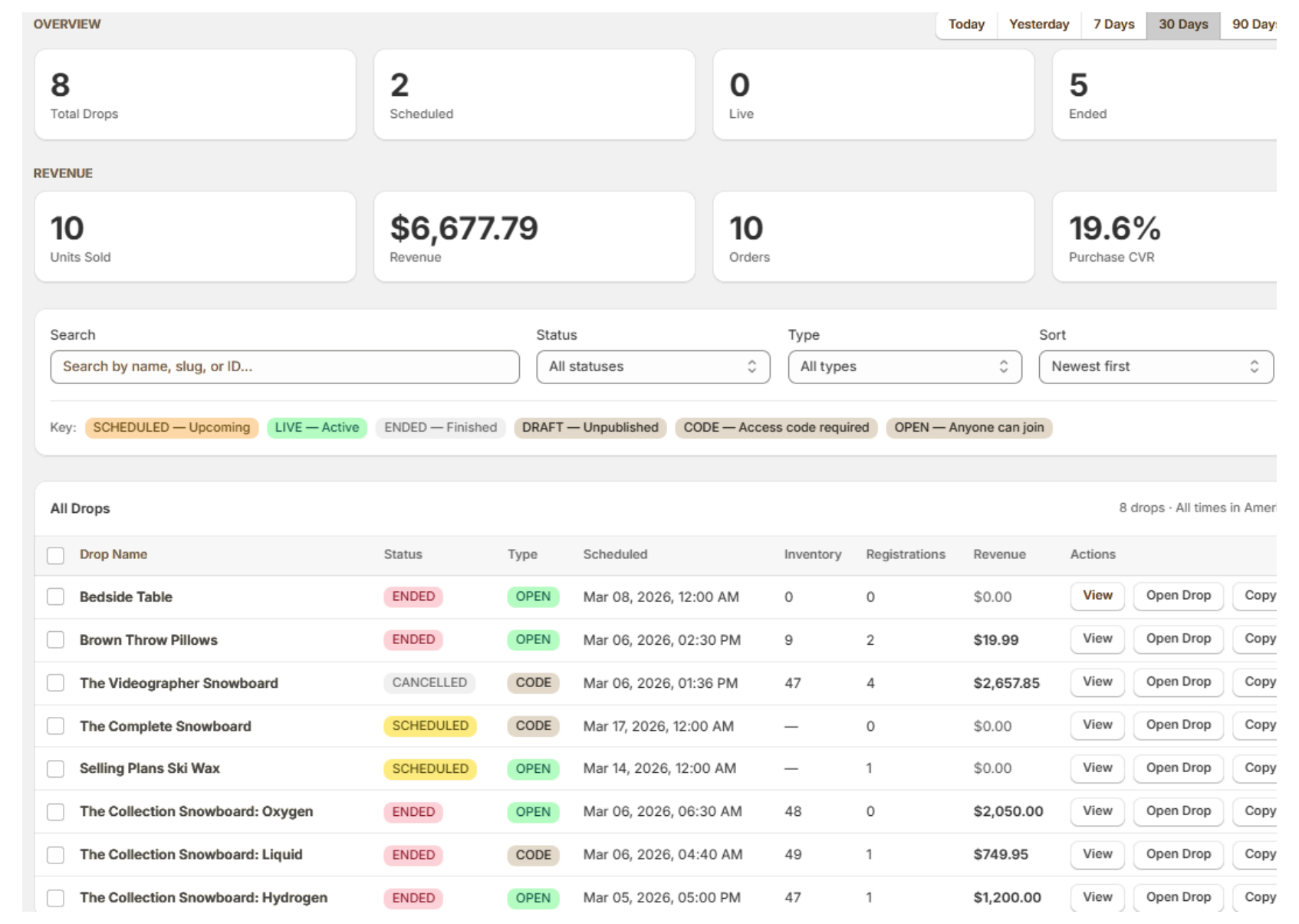
Many brands also collect email addresses from customers who want early access or reminders about the drop. These waitlists allow merchants to notify interested buyers as soon as the product becomes available. Collecting this information also helps brands estimate demand before the release. Countdown pages are another common element of drop launches. These pages display the time remaining before the product becomes available and encourage visitors to return at the exact launch moment. The countdown itself helps build anticipation while also reminding customers when they should visit the store. Some Shopify merchants create dedicated hype pages that gate access to the product until the countdown reaches zero. Infrastructure tools such as UnlistedDrop allow brands to build controlled launch environments with countdown timers, gated access, and structured drop pages inside their Shopify stores. When the drop begins, the product becomes available to all customers simultaneously. Traffic often increases rapidly during this moment as visitors rush to purchase before the inventory sells out.
Why Shopify Merchants Use Product Drops
Many Shopify merchants adopt product drops because the strategy offers several advantages compared with traditional ecommerce launches. Instead of relying entirely on advertising to generate sales, brands can create anticipation and demand before the product becomes available. Product drops also concentrate customer attention into a specific moment, which can significantly increase launch-day sales. When many customers visit the store at the same time, products often sell faster than they would under normal browsing conditions.
Common benefits of product drops include:
- Scarcity increases demand: Limited inventory creates a sense of urgency that encourages customers to purchase quickly. When shoppers believe that a product may sell out, they are less likely to delay their decision.
- Anticipation builds engagement: Marketing campaigns leading up to a drop keep customers interested and involved in the brand’s story. Announcements, previews, and teasers all contribute to growing excitement before the release.
- Faster sell-through rates: Concentrating demand into a short time period often leads to faster product sales compared with items that remain permanently available in the store.
- Lower inventory risk: By producing smaller batches, brands can test demand for new products without committing to large manufacturing runs.
- Memorable brand moments: Drops transform ordinary product launches into events that customers remember and share with others.
These benefits explain why drops are especially common among emerging direct-to-consumer brands trying to build strong relationships with their audiences.
The Psychology Behind Product Drops
The success of product drops is closely connected to how people make purchasing decisions. Consumer psychology plays a significant role in determining whether shoppers decide to buy immediately or postpone their purchase. Scarcity is one of the most powerful psychological triggers in marketing. When a product is available in unlimited quantities, customers often assume they can purchase it later. However, when inventory is limited, shoppers feel pressure to act quickly before the opportunity disappears. Fear of missing out also contributes to the effectiveness of product drops. Customers who see others preparing for a launch may worry that waiting will cause them to lose access to the product. This emotional response can accelerate purchasing decisions.
“Customers are more likely to buy when they believe a product may become unavailable.”
Social proof reinforces these psychological effects. When customers see products selling out quickly, the rapid demand signals popularity and desirability. This perception encourages others to purchase before the inventory disappears. Together, these psychological forces help explain why product drops often generate stronger sales momentum than traditional ecommerce launches.
Examples of Successful Product Drop Strategies
Different brands structure their drops in different ways depending on their products and audiences. While the core concept remains the same, the release strategy can vary significantly. Some brands organize weekly drops that introduce new products at regular intervals. Customers learn to expect new items every week and often return to the store specifically to see the latest release. This predictable schedule helps build consistent engagement with the brand.
Limited edition releases are another common approach. In this model, brands create special versions of products that are available only during a specific drop event. Because the items may never be produced again, customers feel motivated to participate in the launch. Collaboration drops are also widely used. Two brands or creators partner to release a product together, combining their audiences and generating excitement around the joint release. These collaborations often receive significant attention because they bring together communities from both brands. Seasonal drops allow brands to introduce collections tied to holidays, cultural events, or seasonal trends. By timing these releases carefully, companies can align their drops with moments when customers are already paying attention to new products.
How Shopify Brands Run Product Drops
Running a successful drop requires careful preparation and coordination across multiple stages. Most brands begin by building awareness for the upcoming release through teaser campaigns and early product previews. These announcements allow customers to become familiar with the product before the launch occurs.
Brands often collect interest from potential buyers during this stage by offering waitlists or early access registrations. Gathering email addresses allows the company to notify interested customers as soon as the drop begins. This ensures that the most engaged members of the audience know exactly when the product becomes available. Countdown pages are frequently used to maintain anticipation leading up to the launch. These pages display the remaining time before the drop begins and encourage visitors to return at the scheduled release moment. Some Shopify merchants create dedicated hype pages that prevent customers from accessing the product until the countdown ends.
Infrastructure tools such as UnlistedDrop allow brands to build these types of launch experiences inside their Shopify stores without requiring custom development. By organizing drops through structured pages and controlled access, merchants can manage large amounts of launch-day traffic more effectively. When the countdown reaches zero, the product becomes available to all visitors simultaneously. Customers often move quickly to complete their purchases before inventory sells out.
Common Mistakes Brands Make With Product Drops
Although product drops can be highly effective, they require careful planning to work successfully. Several common mistakes can reduce the impact of a drop if brands fail to prepare properly.
- Launching without building anticipation: Drops rely on pre-launch excitement. If customers are unaware that a release is happening, the drop may not generate significant traffic.
- Producing too much inventory: If the product remains available long after the drop begins, the scarcity effect disappears and the release may feel less exciting.
- Poor launch timing: Scheduling a drop at a time when the target audience is unavailable can significantly reduce participation.
- Weak launch infrastructure: If the website struggles to handle traffic during the drop, customers may abandon the purchase process.
- Unclear communication: Customers must know exactly when the drop will begin and how they can participate.
Avoiding these mistakes helps ensure that the drop feels like an organized event rather than a confusing product release.
When Product Drops Work Best for Ecommerce Brands
Product drops are particularly effective for brands that already have engaged communities. Companies with loyal audiences can generate significant excitement around launches because their customers actively follow brand announcements.
Drops are also well suited to creative industries where products carry cultural or emotional meaning. Fashion, art, collectibles, and creator merchandise often perform well in drop environments because customers value exclusivity and uniqueness. Brands that produce limited quantities of products may benefit from drops as well. Instead of quietly releasing small batches of inventory, they can create structured events that generate excitement around each release.
However, drops are not ideal for every type of ecommerce business. Stores selling everyday commodities or widely available products may not benefit from limiting access or creating launch events. The strategy works best when the product has a story that customers want to follow.
The Future of Product Drops in Shopify Ecommerce
Product drops are likely to remain an important part of modern ecommerce strategy as brands continue to experiment with new ways to engage customers. Online shopping is increasingly influenced by experiences rather than simple catalog browsing. Structured launches help transform ordinary product releases into events that customers look forward to.
The growth of creator-led brands and community-driven commerce will likely strengthen the role of drops in the future. When audiences feel connected to a brand’s identity and story, they often enjoy participating in launch events and sharing the experience with others.
Technology is also making drop infrastructure easier to implement. Shopify merchants can now build launch pages, countdown timers, and gated product releases without complex development work. Tools such as UnlistedDrop allow brands to manage these experiences within their existing ecommerce stores. As ecommerce competition continues to increase, structured launches may become an essential strategy for brands that want to stand out. Product drops combine marketing strategy, psychological insight, and operational planning into a system that can generate excitement, engagement, and rapid sell-through.
For many Shopify merchants, the product drop has become one of the most effective ways to launch new products and build lasting relationships with customers.
Explore more blogs