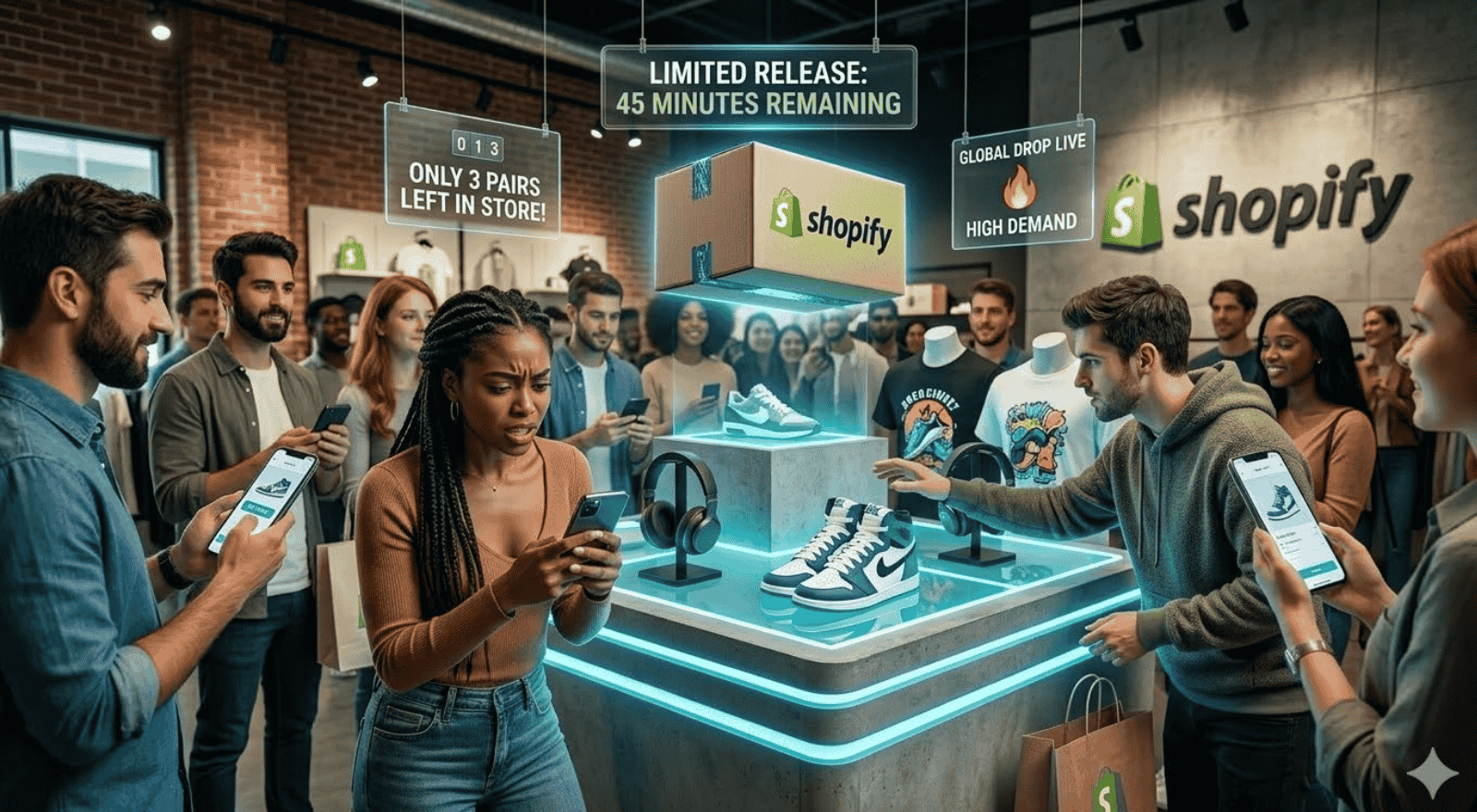
Product drops have become one of the most effective strategies for launching products in ecommerce. Instead of quietly adding items to a store catalog, brands release limited inventory at a scheduled time and build anticipation before the launch. This structure transforms a normal product release into a marketing event that attracts attention and encourages customers to purchase quickly. Shopify merchants increasingly use product drops because they help concentrate demand into a short period of time. When customers know that inventory is limited and the launch will happen at a specific moment, they are more likely to visit the store and participate in the release. This concentrated demand often leads to faster sell-through rates and stronger engagement with the brand.
Running a successful product drop requires more than simply releasing a product at a specific time. Merchants must plan marketing campaigns, build anticipation before the launch, and prepare their store infrastructure to handle traffic spikes. Understanding how to structure these launches correctly allows Shopify brands to turn product releases into memorable events that drive both sales and brand loyalty.
What a Product Drop Means for Shopify Merchants
A product drop is a release strategy where a brand launches a limited quantity of products at a predetermined time rather than making them continuously available. Customers typically know about the release in advance and prepare for the launch by following announcements, joining waitlists, or visiting countdown pages before the drop begins.
This strategy differs from traditional ecommerce launches where products are quietly added to the store and remain available until inventory runs out. In a drop model, the launch becomes a focused moment where many customers attempt to purchase the product at the same time. The limited nature of the release increases perceived value and encourages faster purchasing decisions.
For Shopify merchants, drops provide an opportunity to create excitement around new products while maintaining control over inventory and customer access.
Why Product Drops Work for Ecommerce Brands
Product drops are effective because they combine several powerful marketing principles that influence customer behavior. Scarcity, anticipation, and community engagement all contribute to making these launches successful.
When inventory is limited, customers understand that waiting may cause them to lose access to the product. This perception encourages faster purchasing decisions and reduces the likelihood that shoppers postpone their purchase. Instead of browsing casually, customers become active participants in the launch.
Product drops also generate stronger marketing momentum than traditional releases. Because the launch happens at a specific time, brands can build anticipation through announcements, previews, and teaser campaigns before the drop occurs.
For many ecommerce brands, these factors lead to higher engagement and faster inventory turnover.
Step 1: Plan the Product Drop Strategy
The first step in running a successful product drop is defining the overall strategy. Merchants must determine which product will be released, how much inventory will be available, and when the launch will occur. Careful planning ensures that the drop aligns with the brand’s audience and marketing schedule.
Inventory planning is particularly important. If too many units are produced, the scarcity effect may disappear and the product may remain available long after the launch. If too few units are produced, customers may become frustrated if they cannot participate in the release.
Brands should also consider how the drop fits within their broader product strategy. Some companies run occasional drops for special releases, while others organize regular launch schedules that customers learn to expect.
Step 2: Build Anticipation Before the Launch
Product drops work best when customers know about the release in advance. Building anticipation allows brands to attract attention before the launch and ensures that customers are ready to participate when the product becomes available.
Merchants often begin by announcing the upcoming release through social media posts, email newsletters, and teaser campaigns. These announcements introduce the product gradually rather than revealing everything at once. By releasing information over time, brands create curiosity that encourages customers to follow updates.
Many companies also collect email addresses through waitlists or early-access registrations. These signups allow merchants to notify interested customers when the drop begins. Waitlists also help brands estimate demand and build a list of potential buyers before the launch.
Step 3: Create a Dedicated Drop Page
A dedicated drop page helps organize traffic and provide information about the upcoming release. Instead of sending customers directly to a product page, brands often create a separate page that explains the launch details and displays a countdown timer.
These pages allow merchants to communicate important information such as the release time, product details, and availability. Visitors who arrive early can learn about the product and prepare for the launch rather than encountering an inactive product page.
Many Shopify brands also include early-access signups or notifications on their drop pages. These features allow customers to register their interest and receive reminders when the launch begins.
Step 4: Add Countdown Timers and Access Control
Countdown timers play a significant role in successful product drops because they visually communicate when the launch will occur. When customers see the remaining time before the release, they are more likely to return to the store at the exact moment the drop begins.
Access control is another important component of drop infrastructure. Some brands restrict access to the product page until the launch begins to ensure that all customers see the product at the same time. This approach prevents early purchases and maintains the excitement surrounding the release moment.
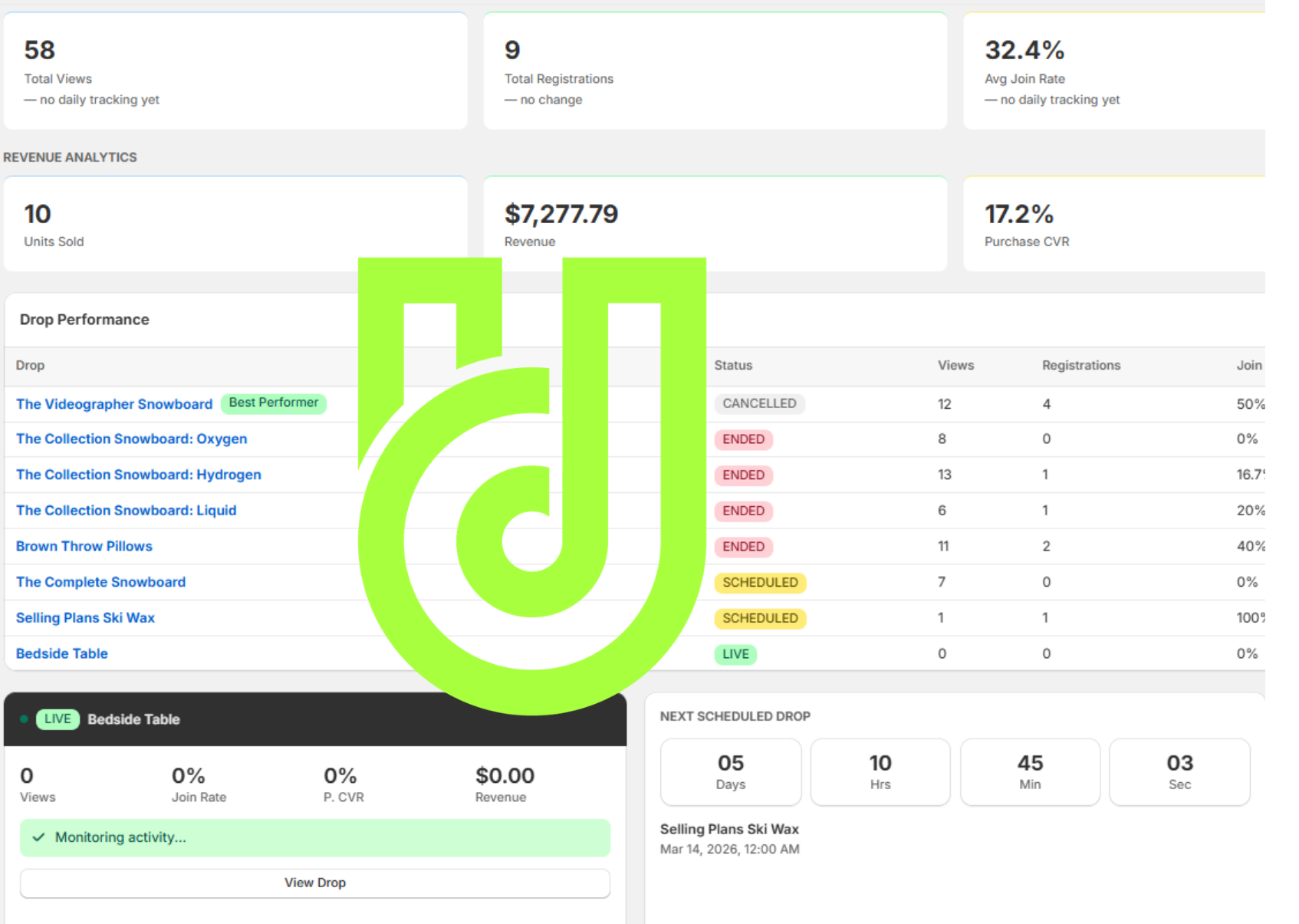
Shopify merchants often use specialized tools to build these launch environments. Platforms such as UnlistedDrop allow merchants to create hype pages with countdown timers, gated access, and structured drop experiences without custom development. These tools help brands manage traffic spikes and maintain the exclusivity that product drops require.
Step 5: Launch the Drop
When the countdown reaches zero, the product becomes available for purchase. This moment often produces a surge of traffic as customers attempt to secure the item before inventory sells out. Brands should ensure that their store is prepared to handle this activity to avoid technical issues that could disrupt the launch.
Many merchants send reminder emails or notifications shortly before the drop begins. These reminders encourage customers to visit the store just before the release so they are ready when the product becomes available.
A successful launch often depends on how well the brand prepared its audience beforehand. When anticipation has been built correctly, customers will already be waiting for the product when the drop begins.
Step 6: Analyze the Results After the Drop
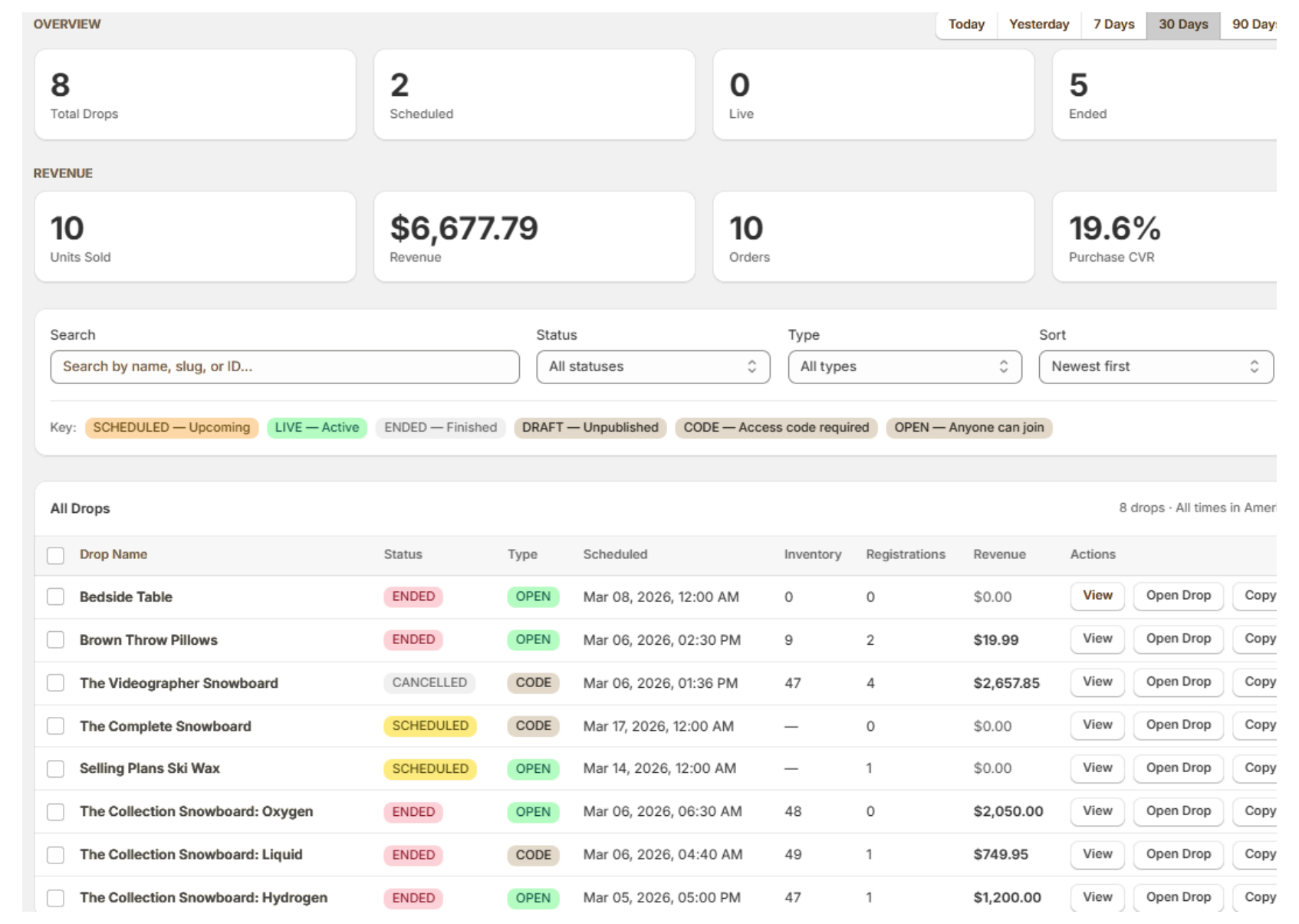
After the launch concludes, brands should review the results of the drop to understand what worked and what can be improved. Metrics such as traffic volume, conversion rate, and sell-through time provide valuable insights into customer behavior during the release.
Merchants can also analyze which marketing channels drove the most traffic to the launch. Social media campaigns, email announcements, and influencer promotions may all contribute to the success of the drop.
These insights help brands refine their strategy for future launches. Over time, companies often develop repeatable drop frameworks that improve the effectiveness of each new release.
Common Mistakes When Running Product Drops
Although product drops can generate strong results, several common mistakes can reduce their effectiveness. Brands should be aware of these issues when planning their launch strategy.
- Launching without pre-launch marketing: Drops rely heavily on anticipation. Without promotion before the release, customers may not know that the launch is happening.
- Producing too much inventory: If the product remains available long after the drop begins, the sense of scarcity may disappear.
- Poor communication about launch timing: Customers must clearly understand when the drop will occur in order to participate.
- Weak store infrastructure: If the website cannot handle launch-day traffic, customers may abandon the purchase process.
Avoiding these mistakes helps ensure that drops remain exciting events rather than confusing product releases.
The Role of Drop Infrastructure Tools
As product drops become more common, many Shopify merchants are investing in infrastructure that helps manage these launches more effectively. Dedicated drop pages, countdown timers, and gated access systems allow brands to structure their releases more professionally.
Tools such as UnlistedDrop provide merchants with the ability to build hype pages and control access to product drops without requiring custom development. These systems allow brands to manage traffic, maintain exclusivity, and create structured launch experiences that match the expectations of modern ecommerce customers.
When infrastructure is implemented correctly, product drops can operate smoothly even when large numbers of customers attempt to access the store at the same time.
Running a product drop on Shopify involves more than simply releasing a product at a scheduled time. Successful launches require careful planning, marketing preparation, and the right infrastructure to manage customer demand. By building anticipation before the release and structuring the launch experience correctly, brands can turn ordinary product launches into events that generate excitement and strong sales momentum.
For Shopify merchants looking to differentiate their stores, product drops offer a powerful strategy for creating memorable releases and improving inventory sell-through. As ecommerce competition continues to increase, structured launches may become an essential part of how modern brands introduce new products to their audiences.
Explore more blogs