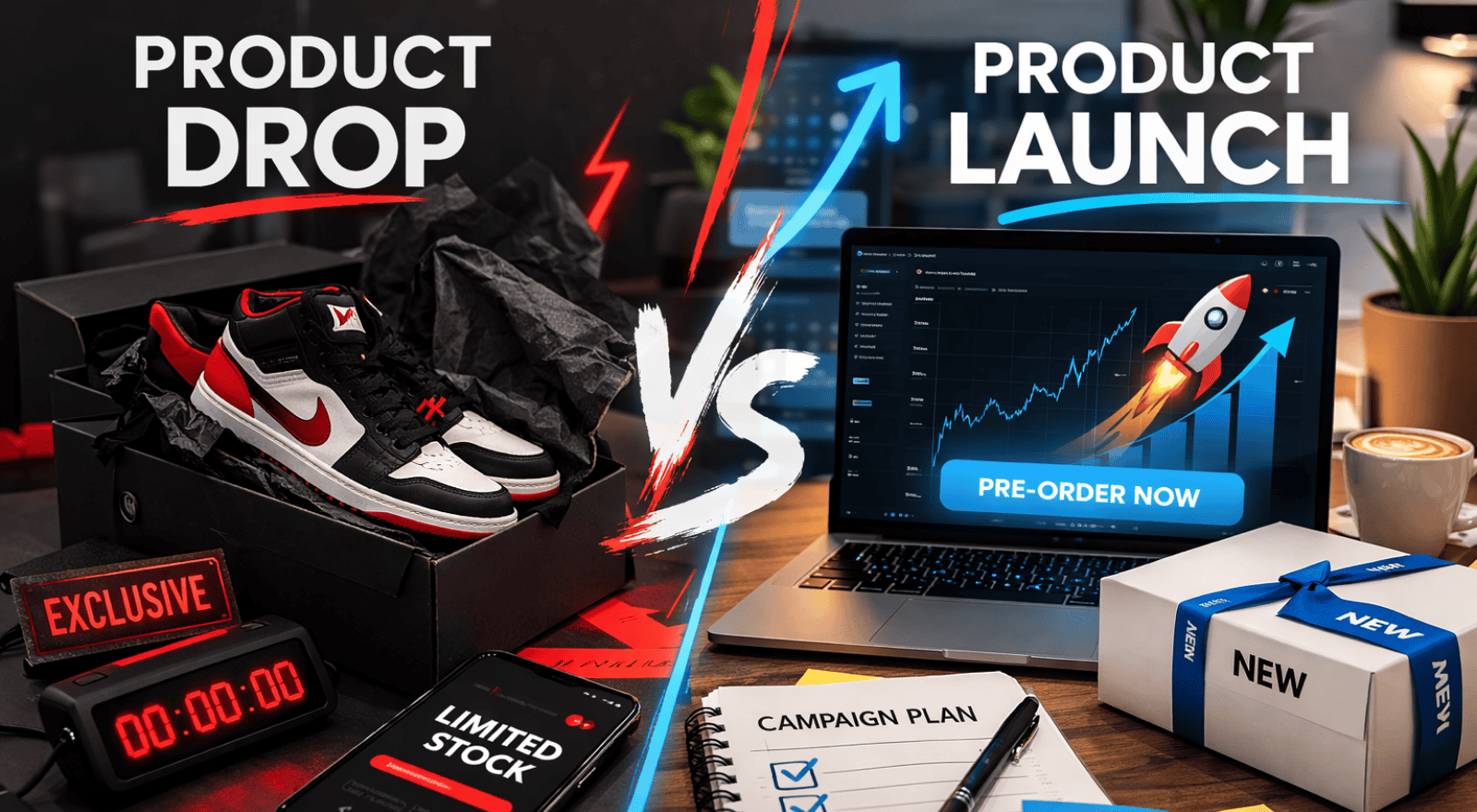
Many Shopify merchants assume that a product drop and a product launch are the same thing. Both involve releasing a new product, so the difference may not seem important at first. In reality, the strategies behind these two approaches are very different and they produce very different outcomes. Understanding the difference between a product drop vs product launch helps merchants control how customers discover products, how anticipation builds, and how demand develops when the release happens. When used correctly, each strategy can play a specific role in a Shopify store’s growth.
A traditional product launch follows the classic ecommerce model where a new item is added to the catalog and then promoted through marketing campaigns. Customers discover the product through advertising, email newsletters, social media, or organic browsing. Sales build gradually as more people encounter the product over time. A product drop works differently because the release is structured around a specific moment when the product becomes available. Instead of relying on discovery, the brand builds anticipation before the release so that customers arrive ready to purchase when the drop begins.
The difference between these two strategies is not just about timing. It affects customer behavior, marketing structure, and the way demand develops for a product. Some releases benefit from the steady exposure of a traditional launch, while others perform far better when introduced through the concentrated attention of a drop.
What Is a Traditional Product Launch?
A traditional product launch is the most common way ecommerce brands introduce new items. The product becomes available in the store, marketing campaigns begin, and customers gradually discover the item through different channels. Some shoppers find the product through social media posts, others through email announcements, and many through browsing the store itself. Because the product remains available in the catalog, customers often feel comfortable waiting before making a purchase.
This approach works well for products that are expected to remain available long term. Everyday apparel, home goods, accessories, and other catalog staples often follow the traditional launch model because the goal is steady sales rather than immediate sellouts. The marketing focus is on reaching as many potential buyers as possible over time rather than concentrating attention on a single release moment.
Another advantage of traditional launches is flexibility. Merchants can test different marketing strategies, adjust product messaging, and optimize advertising campaigns as they learn more about how customers respond to the product. This gradual discovery process allows the product to become a stable part of the store’s catalog while continuing to generate sales through ongoing marketing. Because discovery happens over time, however, traditional launches rarely create sudden spikes in demand. Sales tend to build slowly rather than concentrating around a single event.
What Is a Product Drop?
A product drop uses a completely different structure. Instead of quietly adding a product to the store and allowing discovery to happen gradually, the brand announces a specific release moment and builds anticipation before the product becomes available. Customers know exactly when the product will launch, and they often prepare in advance to participate in the release.
The defining feature of a drop is the buildup before the product becomes accessible. Merchants share teaser content, preview images, and launch announcements days or weeks before the drop. Customers follow these updates closely and begin planning to visit the store at the exact moment the product becomes available. By the time the drop begins, many buyers have already decided whether they want the product.
Drops also typically involve limited availability. Inventory may be restricted to a specific quantity or available only during a short window. This limited access encourages customers to act quickly because waiting may mean missing the opportunity entirely. As a result, a large portion of sales often occurs immediately after the drop begins. Instead of spreading demand across weeks or months, a drop concentrates attention into a short release window where large numbers of customers arrive simultaneously.
The Core Difference Between a Product Drop vs Product Launch
The biggest difference between a product drop vs product launch is how attention and demand are created. A traditional product launch depends on discovery, meaning customers encounter the product when they happen to visit the store or see marketing campaigns. Awareness grows gradually as more people encounter the item, and sales follow the same pattern over time. Because inventory is usually available long term, customers often feel comfortable delaying their purchase until later. A product drop depends on anticipation built before the product becomes available. Customers hear about the release in advance, follow teaser announcements, and prepare to visit the store at a specific moment when the drop begins. By the time the product becomes accessible, many customers have already decided whether they want it. This anticipation changes the purchasing experience because customers arrive ready to buy instead of discovering the product for the first time.
This difference in timing also changes the sales pattern. Product launches spread purchases across longer periods as customers gradually discover the product, while drops concentrate demand around a single release moment. Instead of steady daily sales, merchants often see a surge of traffic and orders when the drop begins.
When a Product Launch Is the Better Choice
Traditional launches remain the best option for many products. Items that are expected to stay in the catalog long term often benefit from gradual discovery rather than a concentrated release moment. When inventory will be restocked regularly and the product is intended to become part of the core offering, a launch allows merchants to promote the item continuously without creating pressure around a specific release time.
Products that solve everyday needs often perform well under this model. Apparel basics, home goods, accessories, and general lifestyle products typically rely on steady discovery through advertising and organic traffic. Customers may encounter the item while browsing the store or seeing it in marketing campaigns, and the purchase decision happens naturally rather than under time pressure.
Traditional launches also allow merchants to experiment with positioning and marketing strategy. If the product is new or untested, releasing it quietly allows the brand to observe customer behavior before investing heavily in promotion. Merchants can refine product descriptions, adjust imagery, and test advertising campaigns as they learn what resonates with customers.
For many Shopify stores, the majority of catalog products will follow the traditional launch model because these items are designed to sell consistently over time.
When a Product Drop Is the Better Strategy
Product drops are most effective when the goal is to create excitement and concentrated demand around a specific release. Instead of treating the product as another item in the catalog, the drop positions the release as an event that customers anticipate. This approach works especially well for products that benefit from limited availability or strong visual appeal.
Limited edition products are a natural fit for drops. When customers know that inventory will be restricted, they become more motivated to participate in the release immediately. Apparel brands often use drops for new collections, exclusive colorways, or collaboration products that will not be restocked once they sell out.
Drops also work well for brands with engaged communities. When customers actively follow a brand’s updates, teaser campaigns and launch announcements generate significant anticipation. Followers begin discussing the upcoming release, sharing previews, and preparing to visit the store when the drop begins.
Over time, consistent drop campaigns can train customers to expect these events. Instead of casually browsing the store, customers begin watching for upcoming releases and participating in launches regularly.
How Product Drops Change Customer Behavior
One of the most important differences between a product drop vs product launch is how customers behave during the release. Traditional launches encourage browsing and gradual discovery. Customers encounter the product while exploring the store or scrolling through marketing content. Because the item is expected to remain available, shoppers often take time to compare options before making a purchase.
Drops create a completely different experience. Customers arrive at the store with a specific goal because they already know which product they want. They are not browsing the catalog casually. Instead, they are waiting for the moment when the product becomes available so they can purchase immediately.
This behavior change occurs because anticipation builds before the release. When customers have been following teaser content and launch announcements, the drop feels like an event rather than a discovery moment. The excitement surrounding the release encourages faster purchasing decisions and stronger engagement with the brand.
For merchants, this shift means that the launch infrastructure becomes more important. Clear release timing, launch pages, and structured access help ensure that customers understand exactly when the drop begins and how they can participate.
The Role of Hype in Product Drops
Hype plays a central role in the success of product drops. Without anticipation, a drop becomes little more than a product listing with limited inventory. What makes drops powerful is the buildup that happens before the release moment. Customers need time to discover the upcoming product, understand its value, and decide whether they want to participate in the drop.
Hype marketing typically begins with teaser campaigns that introduce the product gradually. Merchants may release partial product images, short videos, or behind the scenes content that hints at the upcoming release. These teasers generate curiosity and encourage customers to follow updates leading up to the drop.
Waitlists and early access registrations also help build anticipation. When customers sign up for launch notifications, they demonstrate clear purchase intent and become the first group notified when the drop begins. This allows merchants to gather an audience of interested buyers before the product even becomes available.
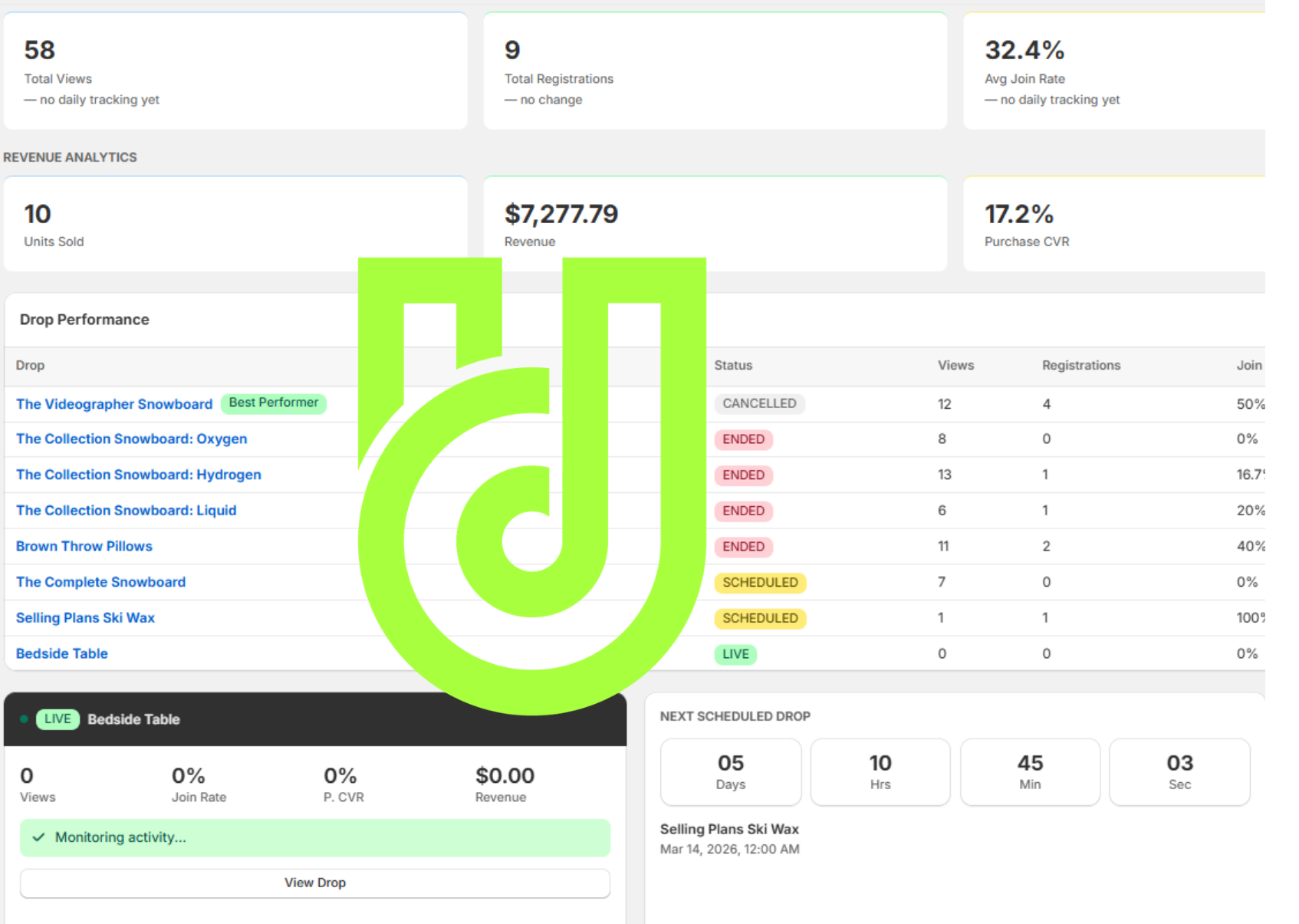
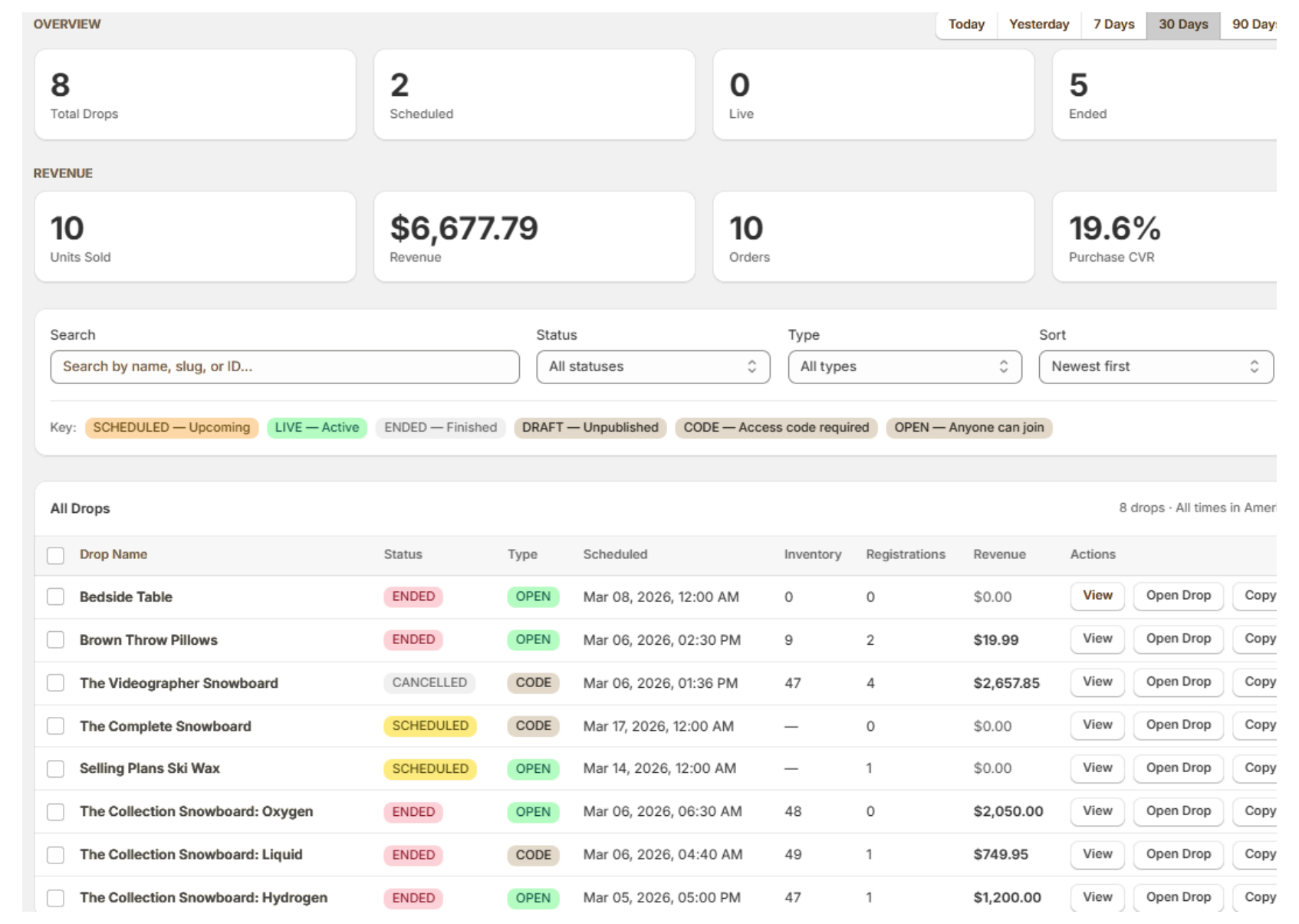
Some Shopify merchants structure these campaigns using dedicated launch pages that display previews, countdown timers, and drop information. Platforms like UnlistedDrop allow merchants to build these hype pages while keeping the product hidden until the exact launch moment, helping ensure that anticipation remains high.
Choosing the Right Strategy for Your Shopify Store
Deciding between a product drop vs product launch ultimately depends on the type of product and the experience you want to create for customers. Traditional launches prioritize discovery and long term availability, making them ideal for products that will remain in the catalog indefinitely. Drops prioritize anticipation and urgency, making them better suited for limited releases and highly visual products.
Many brands use both strategies depending on the situation. Core products that make up the foundation of the catalog may follow the traditional launch model, while exclusive releases and limited editions are introduced through drops. This hybrid approach allows merchants to maintain steady sales while still creating moments of excitement around special releases.
Understanding how these two strategies differ gives Shopify merchants greater control over how products enter the market. Instead of treating every release the same way, merchants can choose the approach that best fits the product, the audience, and the goals of the launch.
If you are planning your first product drop on Shopify, tools like UnlistedDrop help merchants build hype pages, countdown launch experiences, and controlled product access so items remain hidden until the exact drop moment. The 7 day free trial allows merchants to structure a launch and test how drop infrastructure works before committing.
Explore more blogs