Scarcity marketing is one of the most powerful psychological strategies used in ecommerce. The idea is simple: when people believe a product is limited or difficult to obtain, they tend to value it more highly. This perception can dramatically influence purchasing behavior, encouraging customers to act quickly instead of delaying their decision. In modern ecommerce environments, shoppers are exposed to thousands of products every day. With so many options available, many customers postpone purchases or abandon products they initially considered buying. Scarcity marketing introduces urgency into the buying process by communicating that access to a product may disappear if the customer waits too long.
Many successful Shopify brands rely on scarcity-driven strategies to increase demand and improve product launches. Limited inventory releases, countdown timers, and exclusive access campaigns all rely on psychological triggers that influence how customers evaluate opportunities.
What Scarcity Marketing Means in Ecommerce
Scarcity marketing is a strategy that increases demand by limiting product availability or access. The limitation may involve the number of units available, the time window for purchasing, or the number of people allowed to participate in a release. When customers perceive that access is restricted, they become more motivated to secure the product before the opportunity disappears.
This approach works because people often place greater value on items that appear rare or exclusive. When a product seems widely available, customers assume they can return later to purchase it. However, when availability is limited, the risk of missing the opportunity becomes more significant.
For ecommerce brands, this psychological shift can lead to faster purchasing decisions and stronger product demand.
The Role of Loss Aversion in Buying Decisions
One of the strongest psychological forces behind scarcity marketing is loss aversion. This concept describes the tendency for people to fear losing an opportunity more than they value gaining something new. In other words, the possibility of missing out can motivate action more strongly than the promise of a benefit.
When customers see a product described as limited or available only for a short time, they begin evaluating the risk of losing access to that item. Even if they were previously undecided about purchasing, the potential loss of the opportunity can push them toward making a decision.
Ecommerce brands often leverage this behavior by emphasizing limited inventory or short availability windows. When customers believe they might lose access to a product, they are more likely to complete the purchase immediately.
This psychological trigger explains why limited releases frequently sell out faster than products that remain permanently available.
Fear of Missing Out and Social Influence
Fear of missing out, often called FOMO, plays a major role in scarcity marketing. Customers frequently observe how other people interact with products, especially in social environments such as online communities or social media platforms.
When shoppers see that others are preparing for a product launch or that items are selling quickly, they begin to perceive the product as more desirable. This social influence can create momentum around a release as more customers decide to participate.
Scarcity amplifies this effect by introducing urgency into the situation. If customers believe a product will sell out quickly, they may feel pressure to act immediately rather than risk losing access.
The combination of social proof and scarcity can create a powerful marketing dynamic that encourages rapid purchasing decisions.
How Scarcity Changes Perceived Value
Scarcity does not only influence urgency; it also changes how customers perceive the value of a product. When an item is widely available, customers tend to evaluate it primarily based on price and functionality. However, when availability becomes limited, the product may begin to feel more exclusive.
Exclusivity can significantly increase perceived desirability. Customers may believe that limited products represent higher quality, greater prestige, or stronger brand identity. Even if the product itself remains unchanged, the limited availability alters how it is perceived.
For ecommerce brands, this shift in perception can be extremely valuable. Products that feel exclusive often generate stronger interest and engagement than items that appear easily accessible.
Types of Scarcity Used in Ecommerce
Brands can create scarcity in several different ways depending on the type of product and the marketing strategy being used. Each approach influences customer behavior by restricting access to the product in some form.
Common scarcity strategies include:
- Limited inventory releases: Brands produce a specific number of units and communicate that the product will sell out once inventory is gone. This strategy is widely used in fashion and collectible markets.
- Time-limited offers: Products or discounts are available only for a short period. Once the time window closes, the offer disappears.
- Exclusive access releases: Certain customers receive early access to products before the general public. These groups may include email subscribers or loyalty program members.
- Scheduled product drops: Products become available at a specific time rather than remaining permanently in the store catalog.
Each of these tactics uses scarcity to motivate customers to act quickly.
Scarcity Marketing and Product Drops
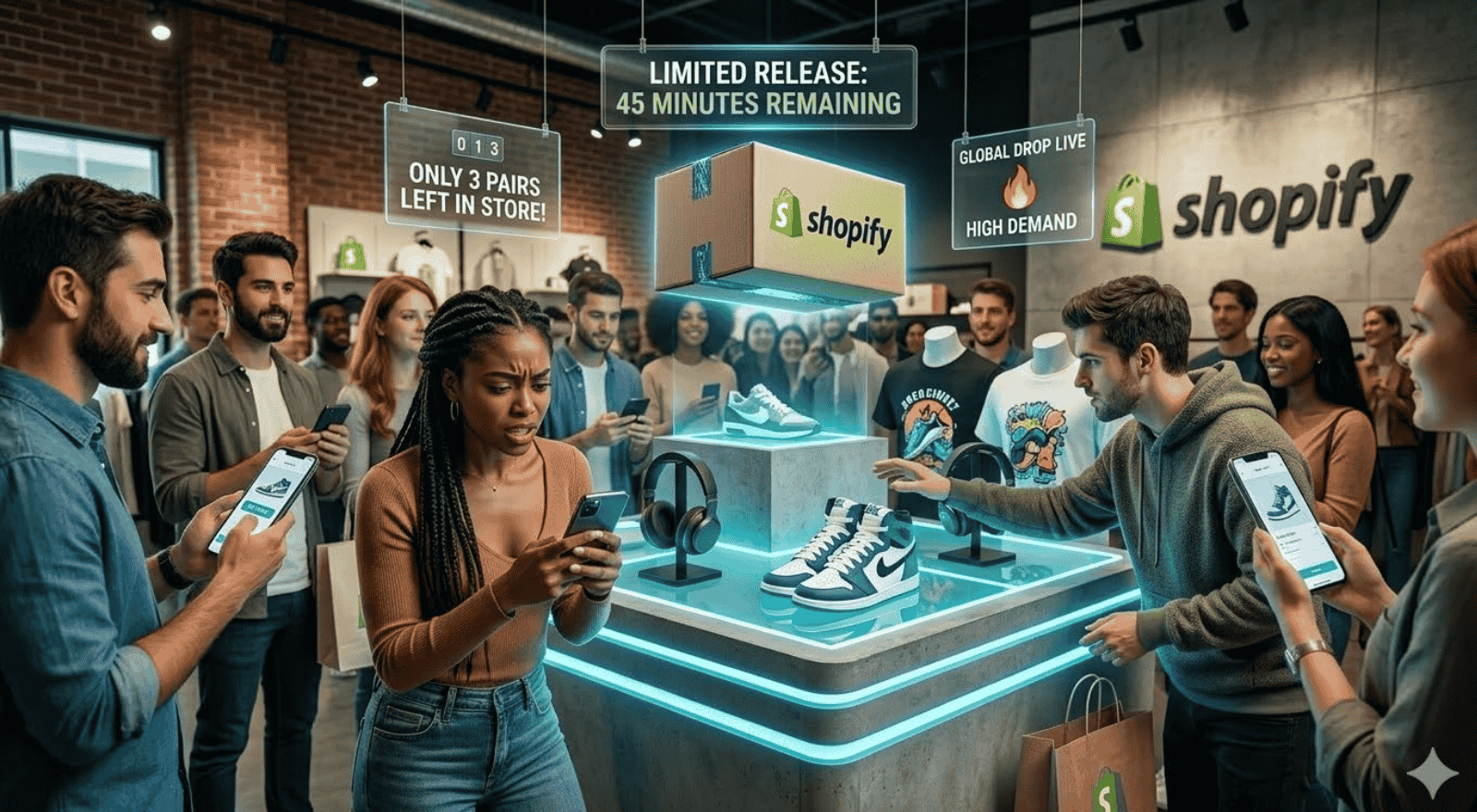
Product drops are one of the most recognizable applications of scarcity marketing in ecommerce. Instead of continuously selling a product, brands release limited inventory at a scheduled time and allow customers to participate in the launch. Because inventory is limited, customers know that waiting may result in missing the opportunity to purchase. This awareness encourages visitors to arrive at the store early and complete their purchases quickly once the drop begins.
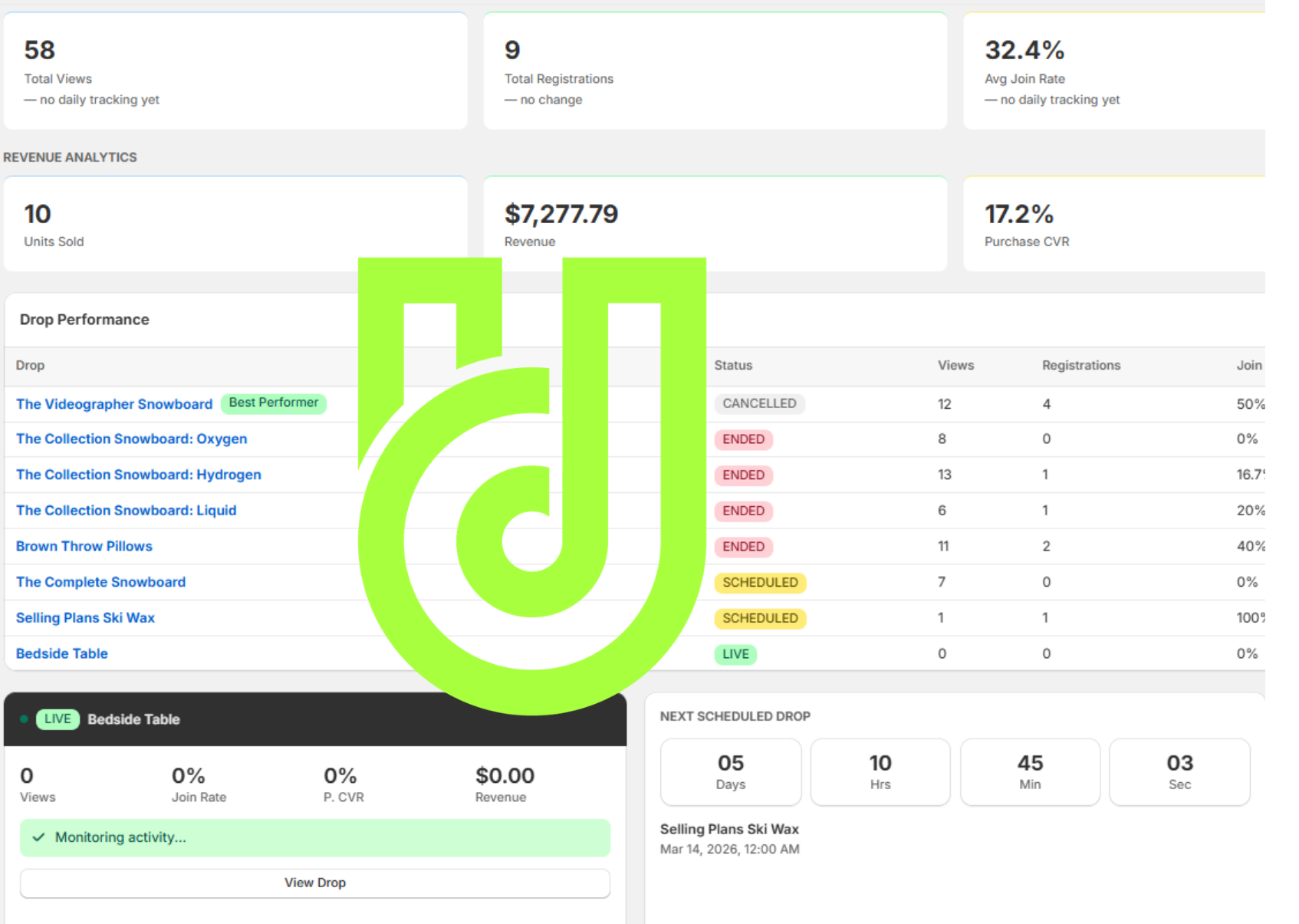
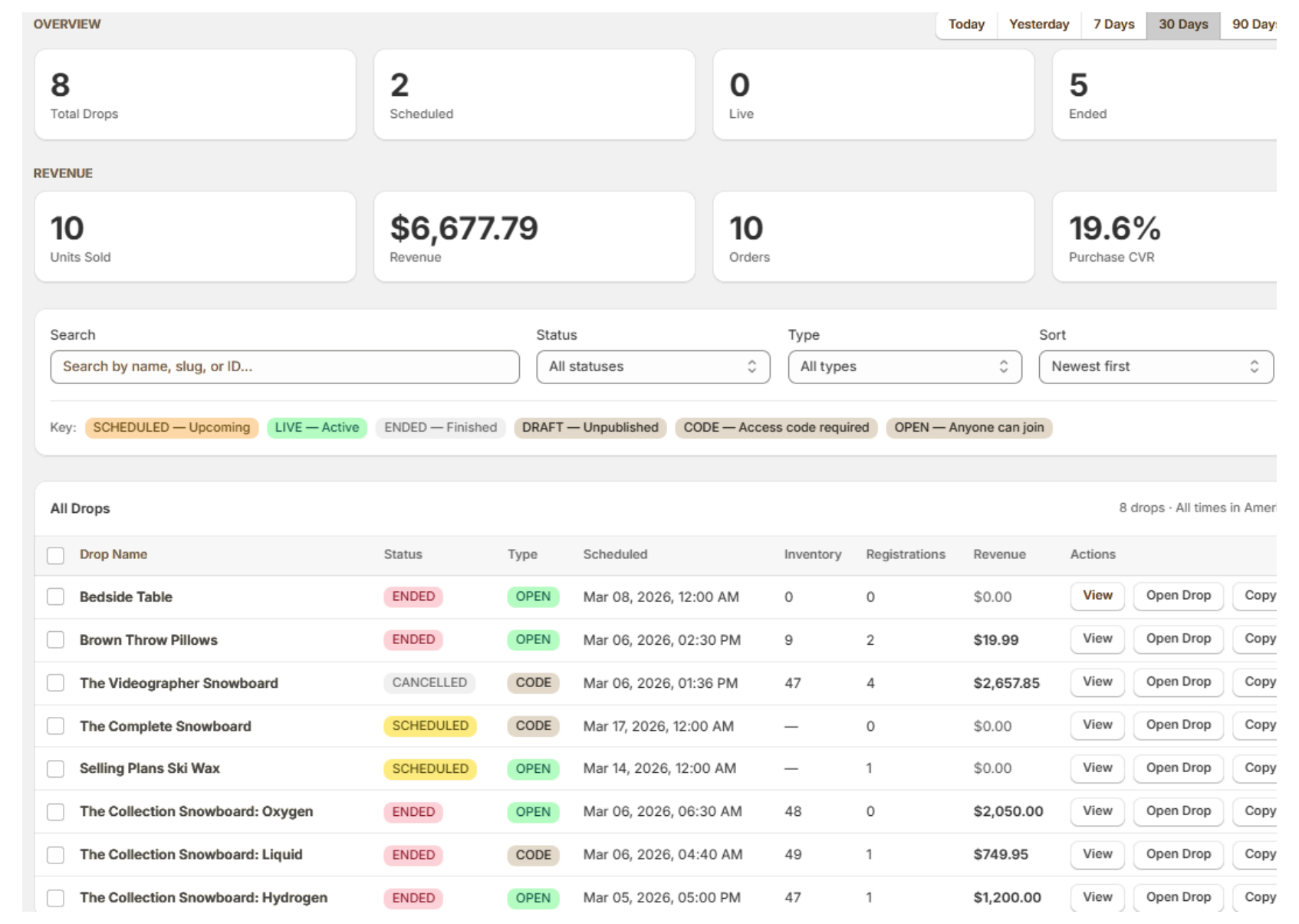
Many Shopify merchants support these launches with countdown pages and hype marketing campaigns that build anticipation before the release. These pages help customers prepare for the drop while reinforcing the sense of exclusivity surrounding the product. Tools such as UnlistedDrop allow merchants to create countdown launch pages and controlled drop environments within Shopify stores. By organizing the release infrastructure properly, brands can maintain the scarcity effect that makes product drops successful.
Benefits of Scarcity Marketing for Shopify Brands
Scarcity marketing offers several advantages for ecommerce brands when used thoughtfully. By creating urgency around a product, merchants can influence customer behavior in ways that increase engagement and sales.
Key benefits include:
- Faster purchasing decisions: Customers are less likely to delay purchases when they believe inventory may sell out quickly.
- Higher perceived value: Limited products often appear more exclusive and desirable to shoppers.
- Increased launch engagement: Scarcity encourages customers to participate actively in product releases.
- Improved inventory management: Producing smaller batches allows brands to test demand before committing to large production runs.
These advantages explain why scarcity marketing is widely used across many ecommerce industries.
Risks of Using Scarcity Incorrectly
Although scarcity marketing can be powerful, it must be used carefully. If customers believe that scarcity is artificial or misleading, the strategy may damage trust in the brand.
For example, if a product is advertised as limited but remains available indefinitely, customers may begin to question the authenticity of future launches. Genuine scarcity works best when the limitation is real and clearly communicated. Brands should also avoid using scarcity for every product release. If urgency is constant, customers may become desensitized to the messaging and ignore it entirely. Scarcity tends to be most effective when reserved for special launches or limited collections.
Scarcity marketing will likely remain an important strategy for ecommerce brands as online competition continues to increase. Customers are drawn to products that feel exclusive or difficult to obtain, and brands can use scarcity to create these perceptions around their launches.
The rise of creator-led commerce and community-driven brands will also strengthen the role of scarcity marketing. When audiences feel connected to a brand, they are often more excited to participate in limited releases and exclusive product launches.
Technology is making these strategies easier to implement for Shopify merchants. Countdown pages, gated product launches, and structured drop environments can now be built without complex development work. Platforms such as UnlistedDrop allow brands to design launch experiences that reinforce scarcity while managing traffic during high-demand releases.
For many modern ecommerce brands, scarcity marketing has become a central component of successful product launch strategies.
Explore more blogs